Day 11 is a day off. I’ve already completed 418 miles, and 19,458 feet ascent. ( 674 km, and5,931 meters ascent)
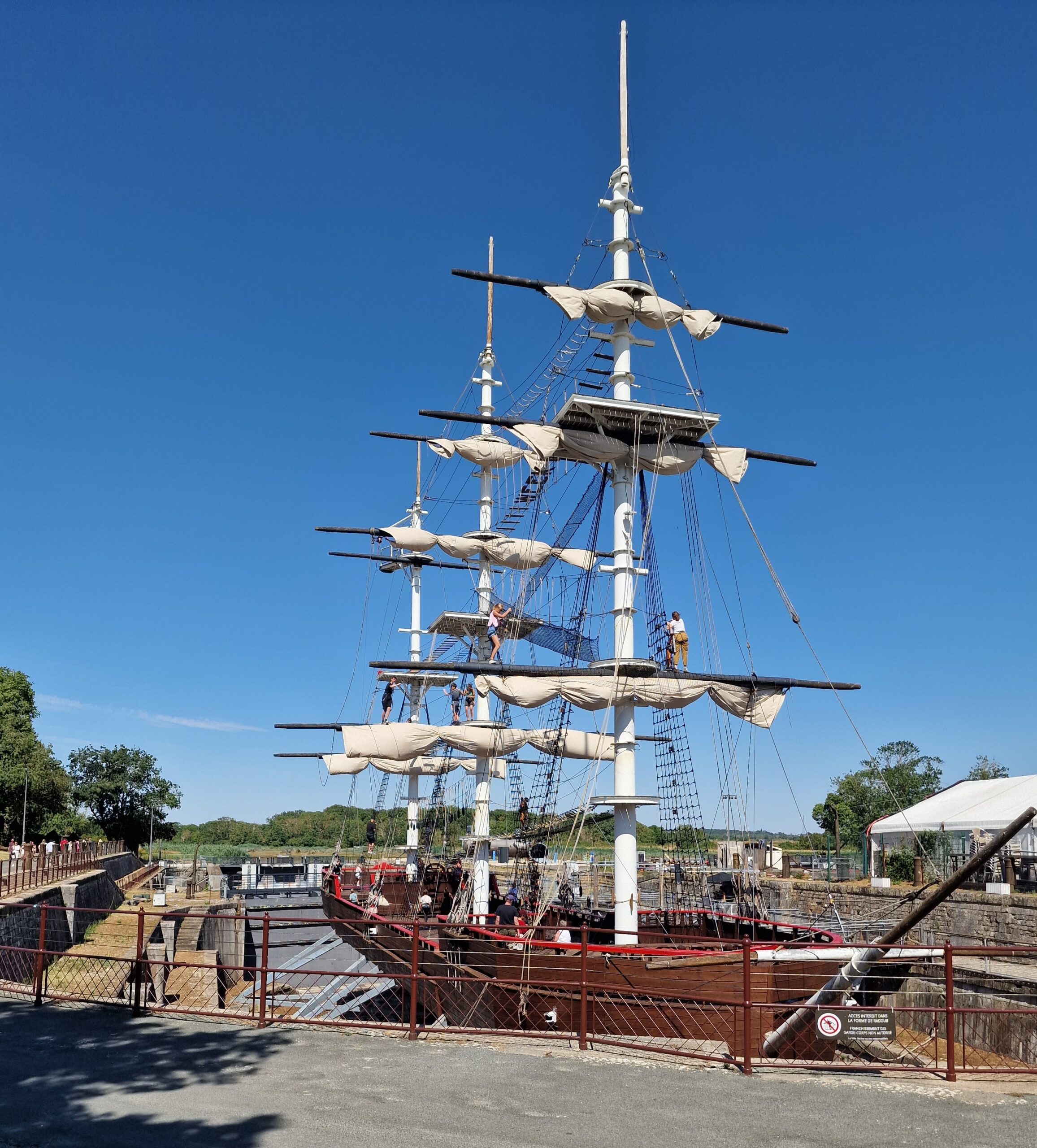
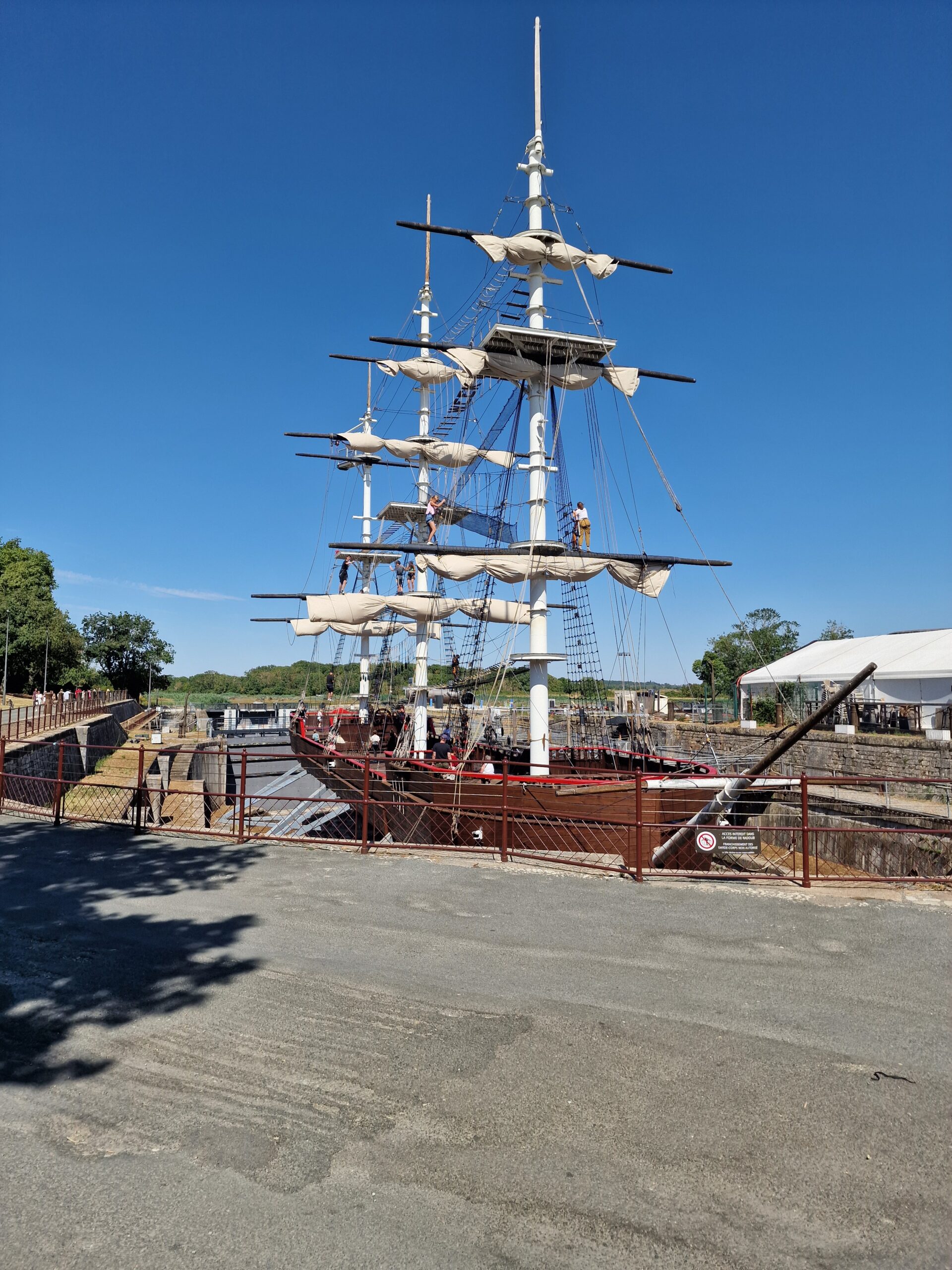
.A break is needed, so I’m glad that I’ve got two nights here. The place is absolutely fascinating. It’s a former French naval port, and now is a major tourist centre.
Here are some photos. I hope you enjoy. The site is absolutely massive, and the residence where I’m staying looks like it could contain a whole squadron of navy personnel!
Marathon bike Ride Raising money for medical aid for Ukrainian familiesPLEASE DONATE
CLICK HERE to see my diary for the last 9 day from Bilbao in Spain to Rochefort in France – over 400 miles and nearly 20,000 ft of ascent
THE JOURNEY TODAY:
81 km and 709 m of ascent. 28 C and a windy afternoon
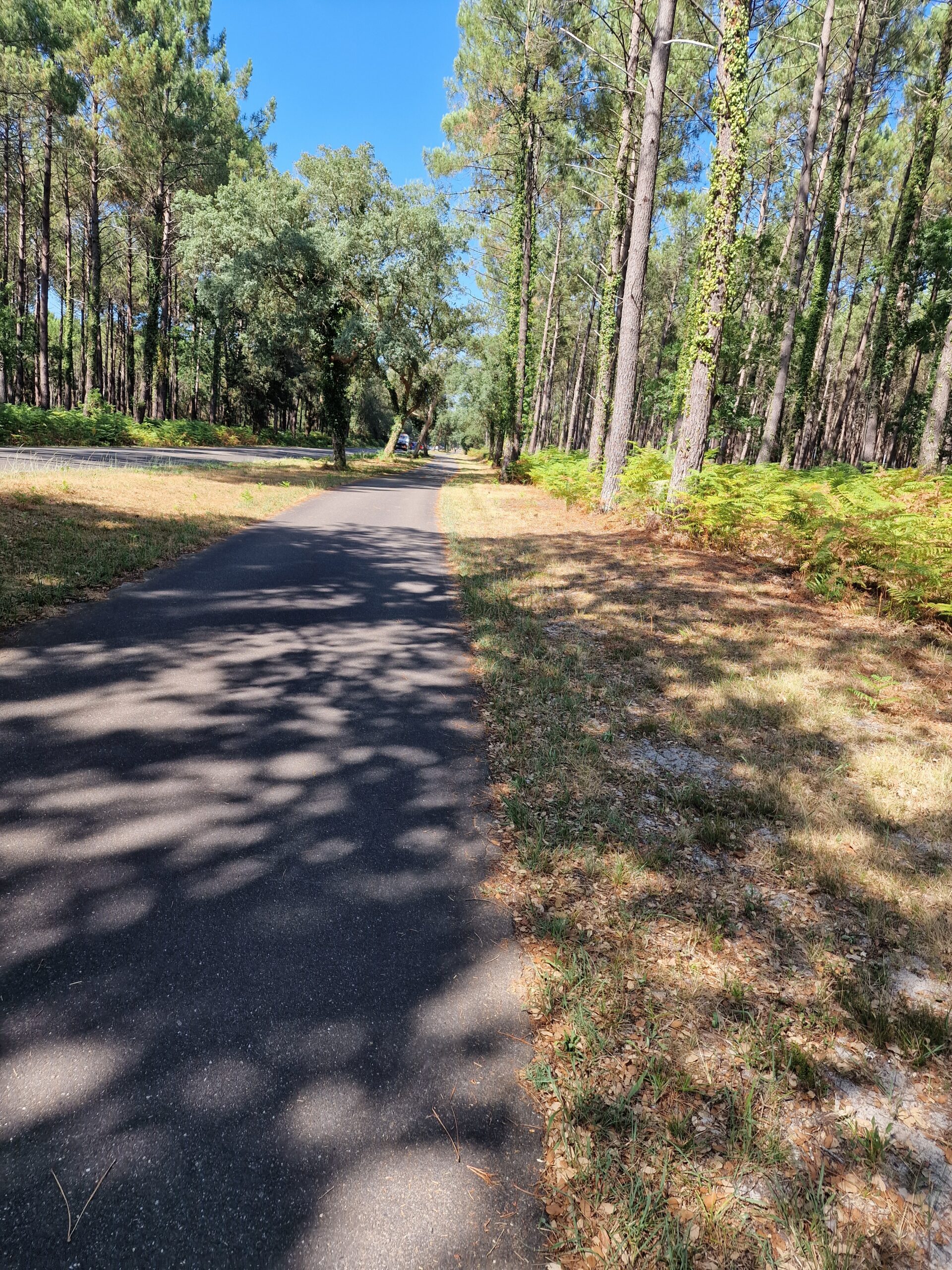
Today’s journey was from Royan to Rochefort, along a very different coastline to that which I’d experienced on the long journey from Biarritz northwards through the pine forests. This time, one could actually view the coast at quite a number of points, rather than cycling through pine trees. Pine trees are lovely, but there is a limit!
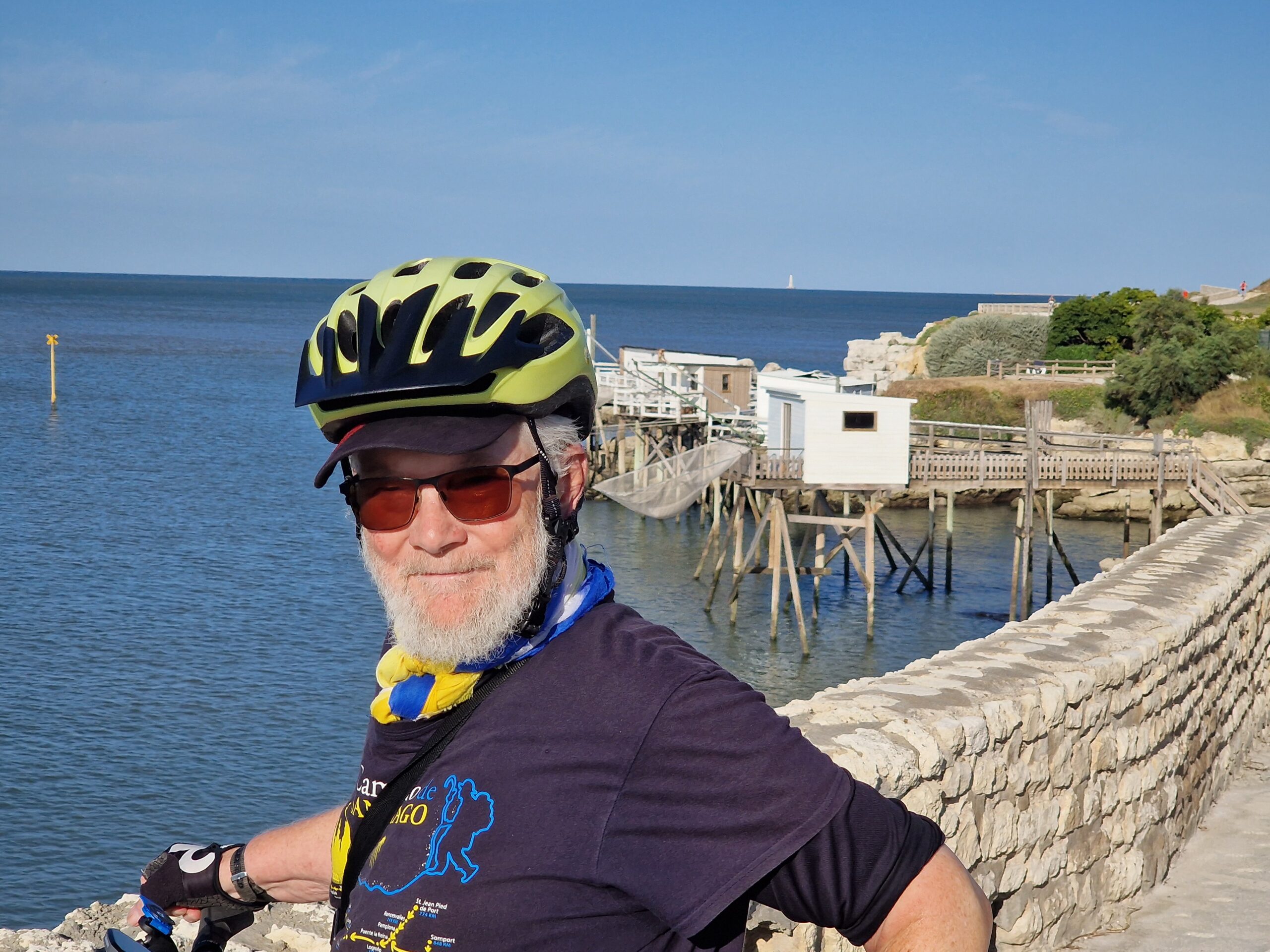
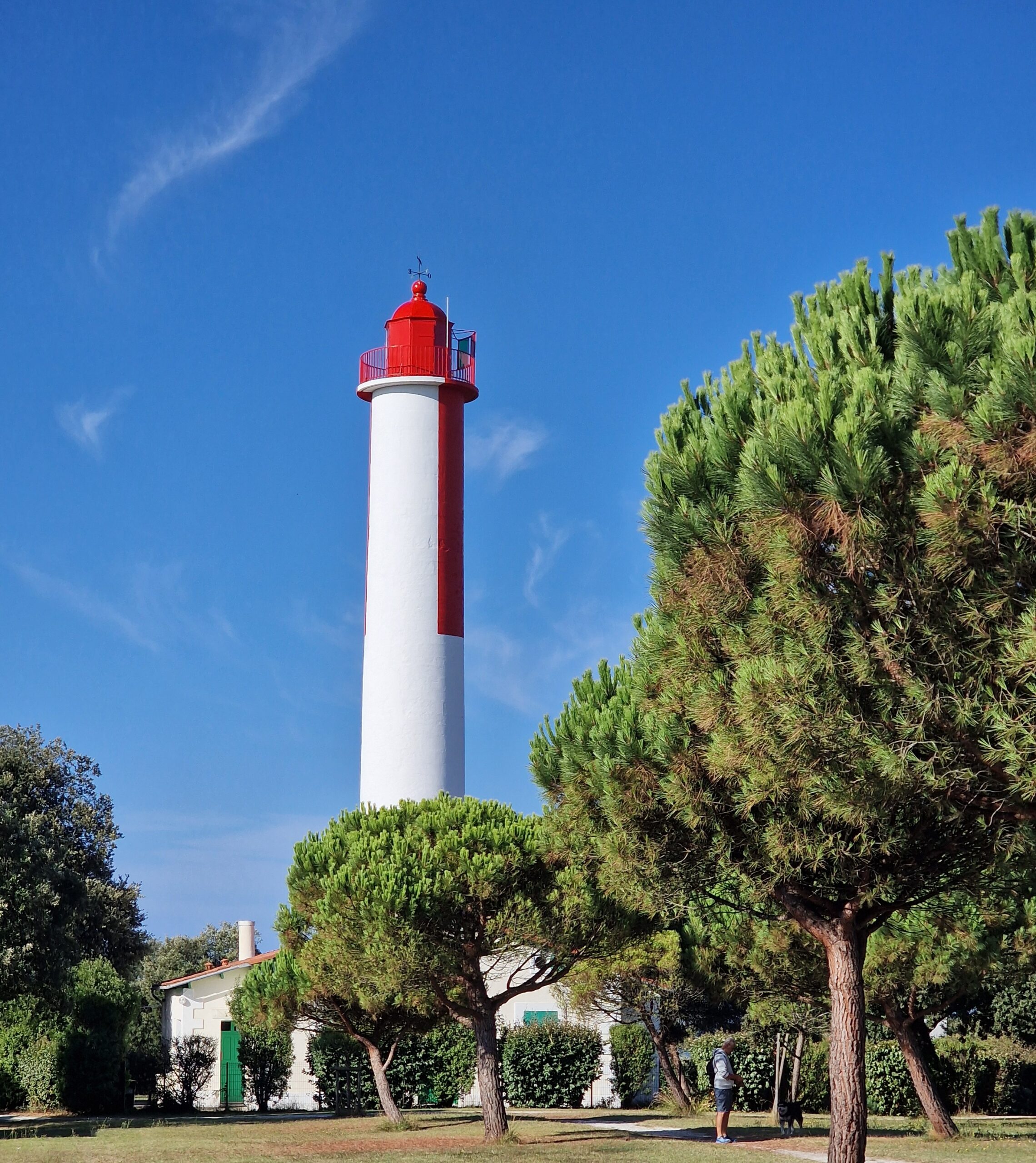
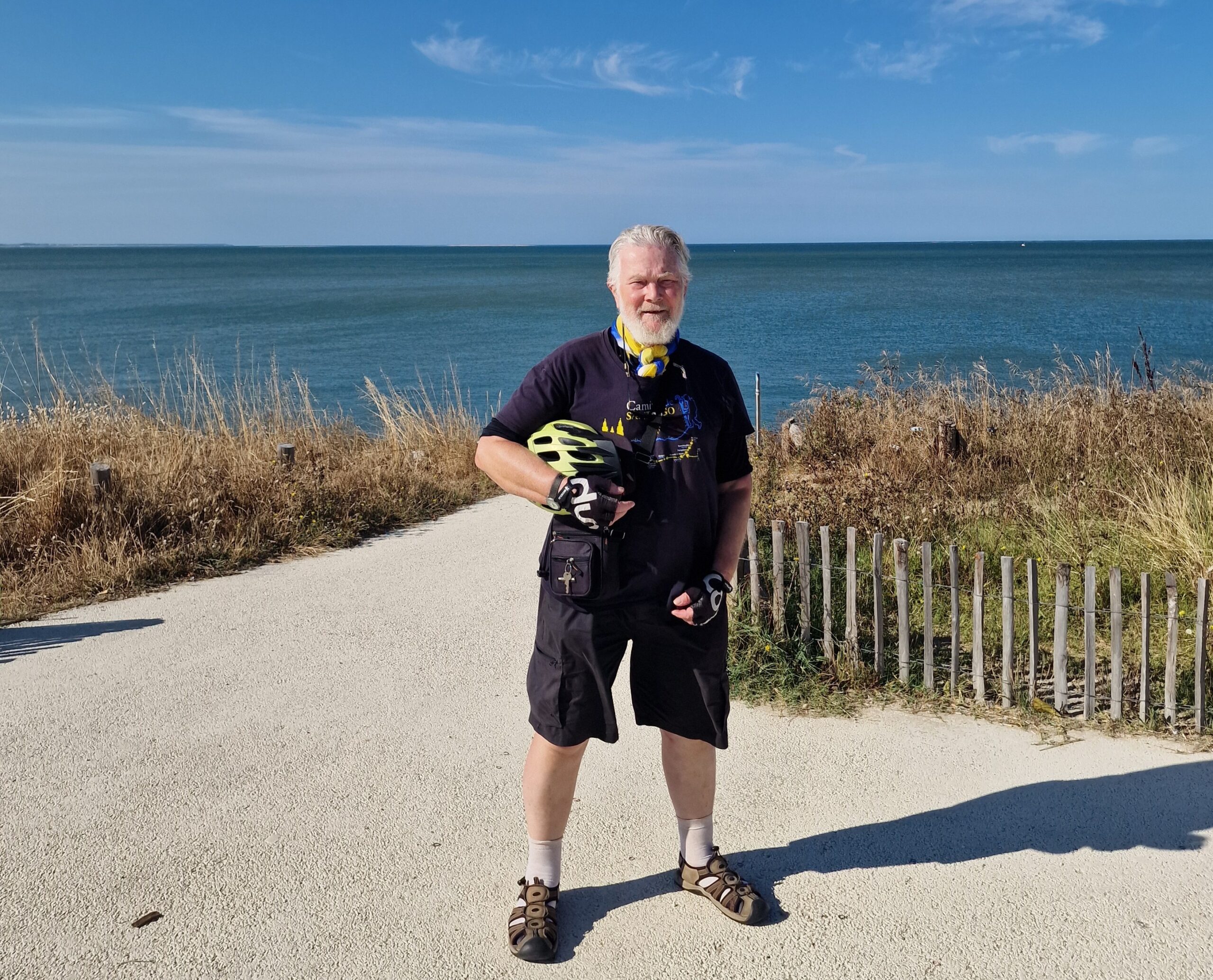
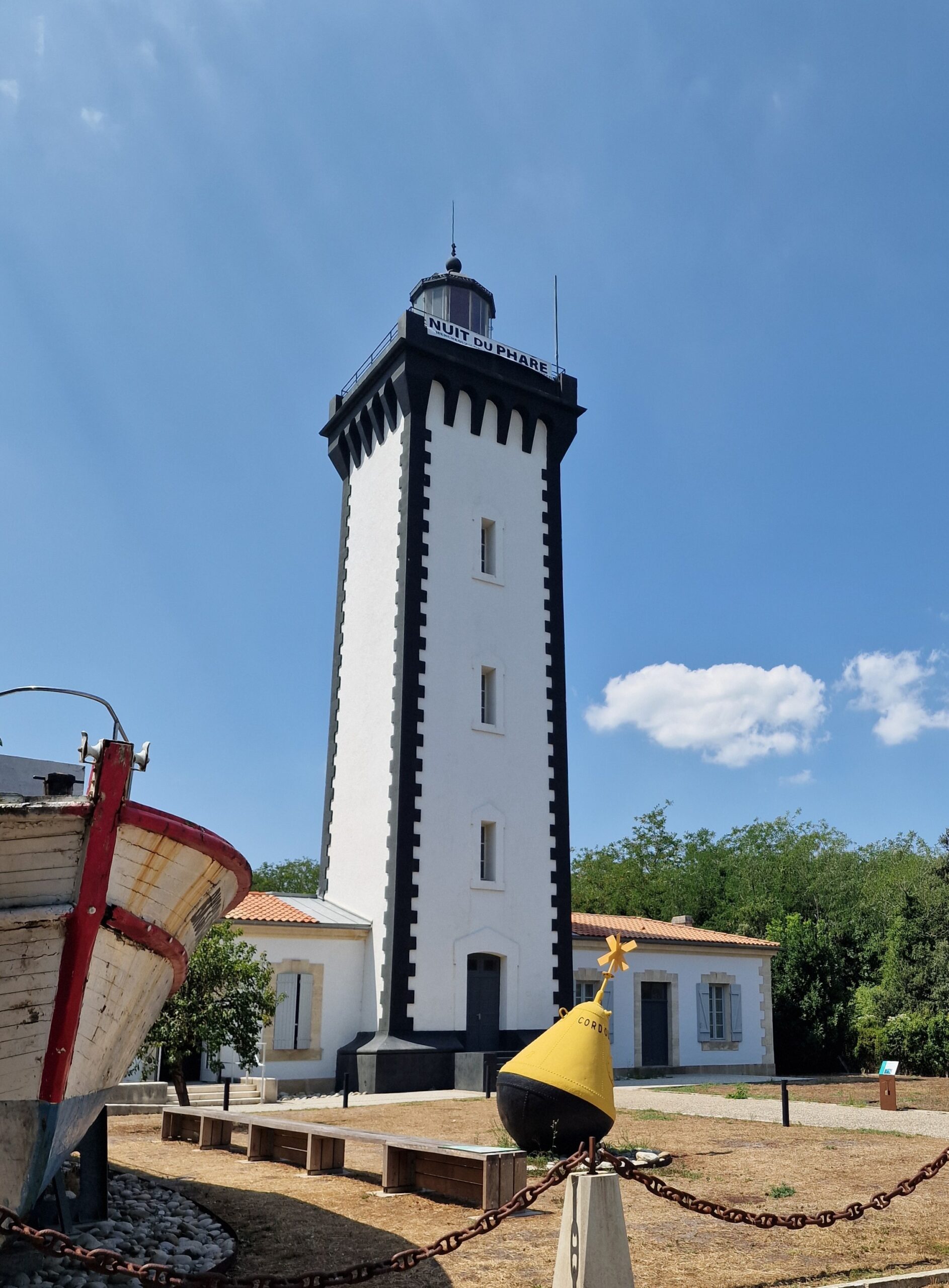
Part of this journey is with my cycling buddies, Joy and Greg. Here, Greg had photographed me next to the traditional shrimp net hutment. The nets are lowered into the water on the tide so as to harvest the little creatures . Further on, we see evidence of another beautiful lighthouse which has been preserved as an icon along this coast.
Here, I am standing at the very mouth of the Gironde River, and I recall my reading of the Cockleshell Heroes who were launched from a submarine somewhere near here to then canoe down the Gironde River to Bordeaux to blow up German cargo ships. I think they had to canoe 70 miles, hiding in daylight amongst the marshes before they got to the target area. The weather wasn’t like this it was Autumn and stormy and wet. Sadly, I think only two of the Cockleshell Heroes survived.
I now cycle away from the main coast, leaving behind L’île d’Oléron (one day I will get there on day!)
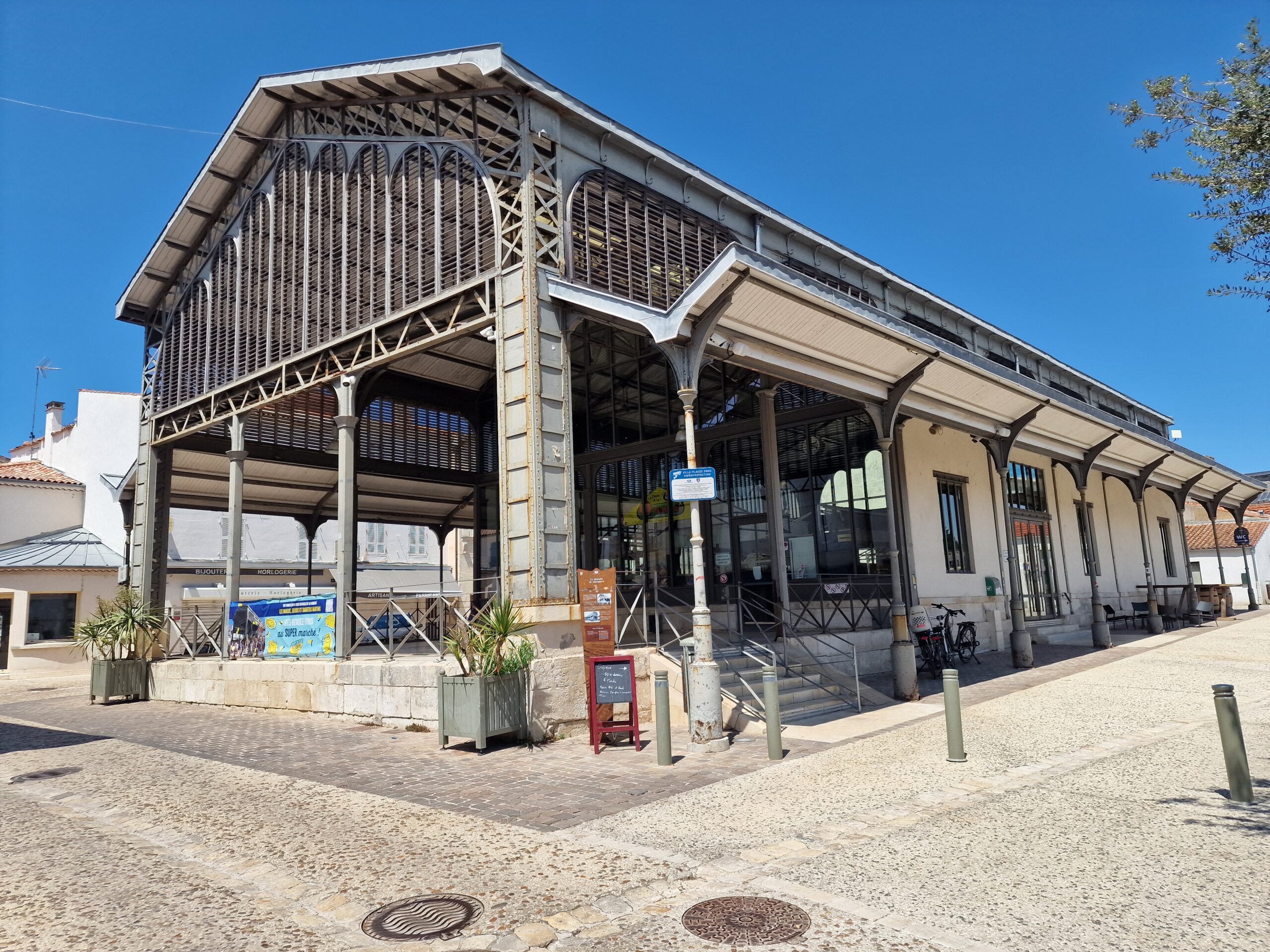
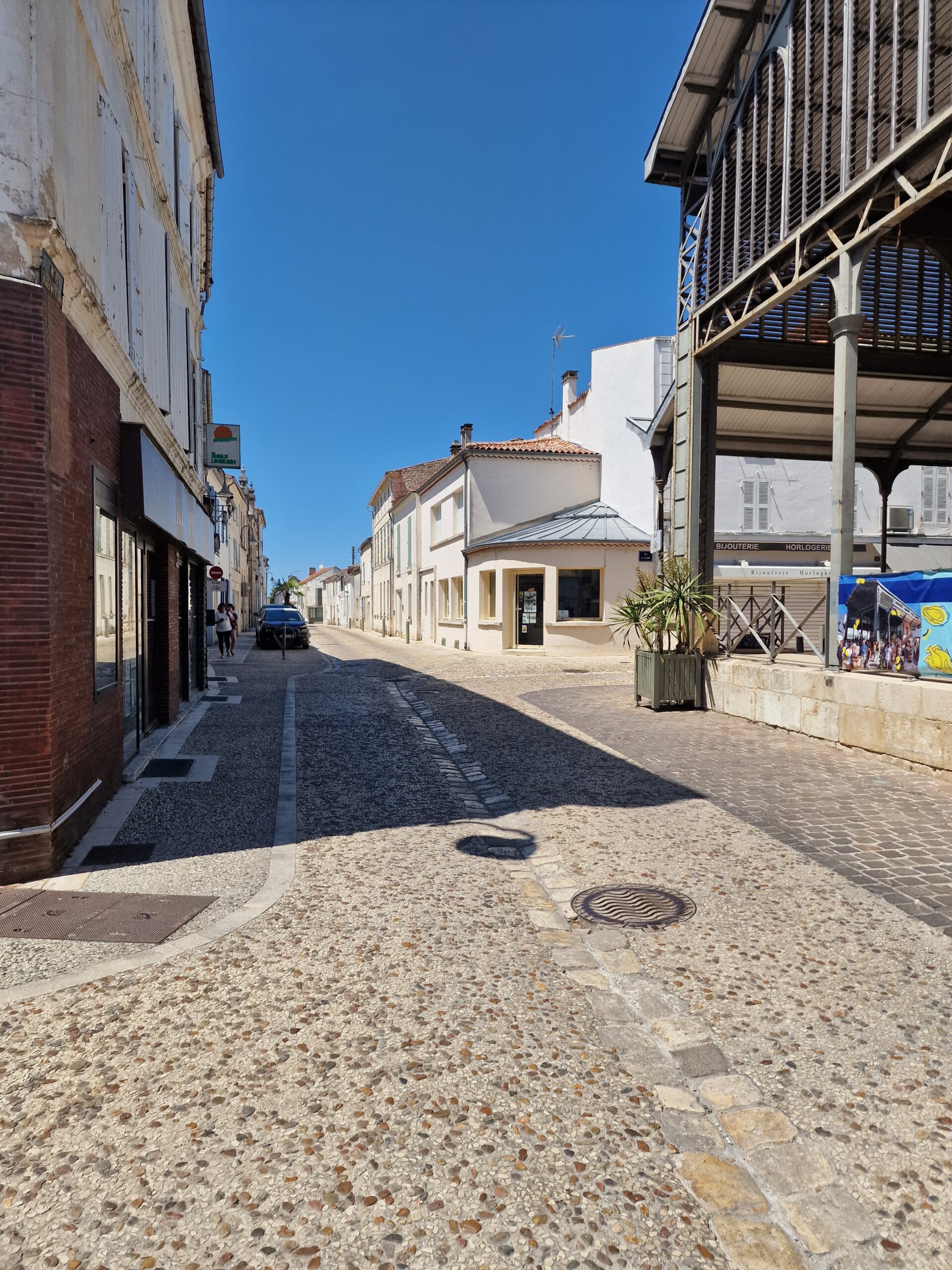
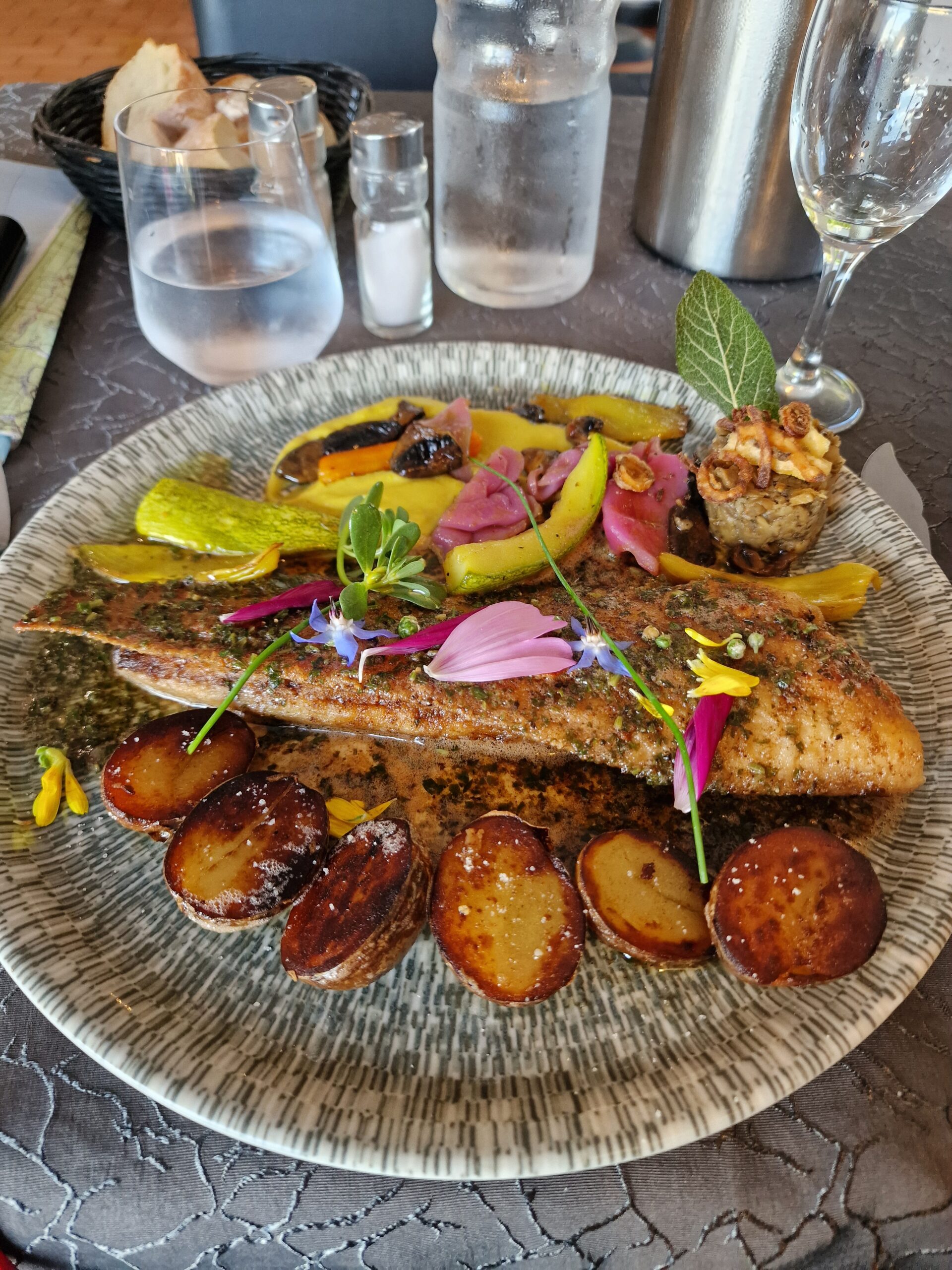
There are still sand dunes, but they are much lower. The challenge now was to get over it’s very high road bridge in very windy conditions. It took ages to walk my bike over the bridge. I was compensated by going into an old town on the northern side. Marennes has a wonderful market square. I had a superb meal for €14.50 next to the old market. Super!
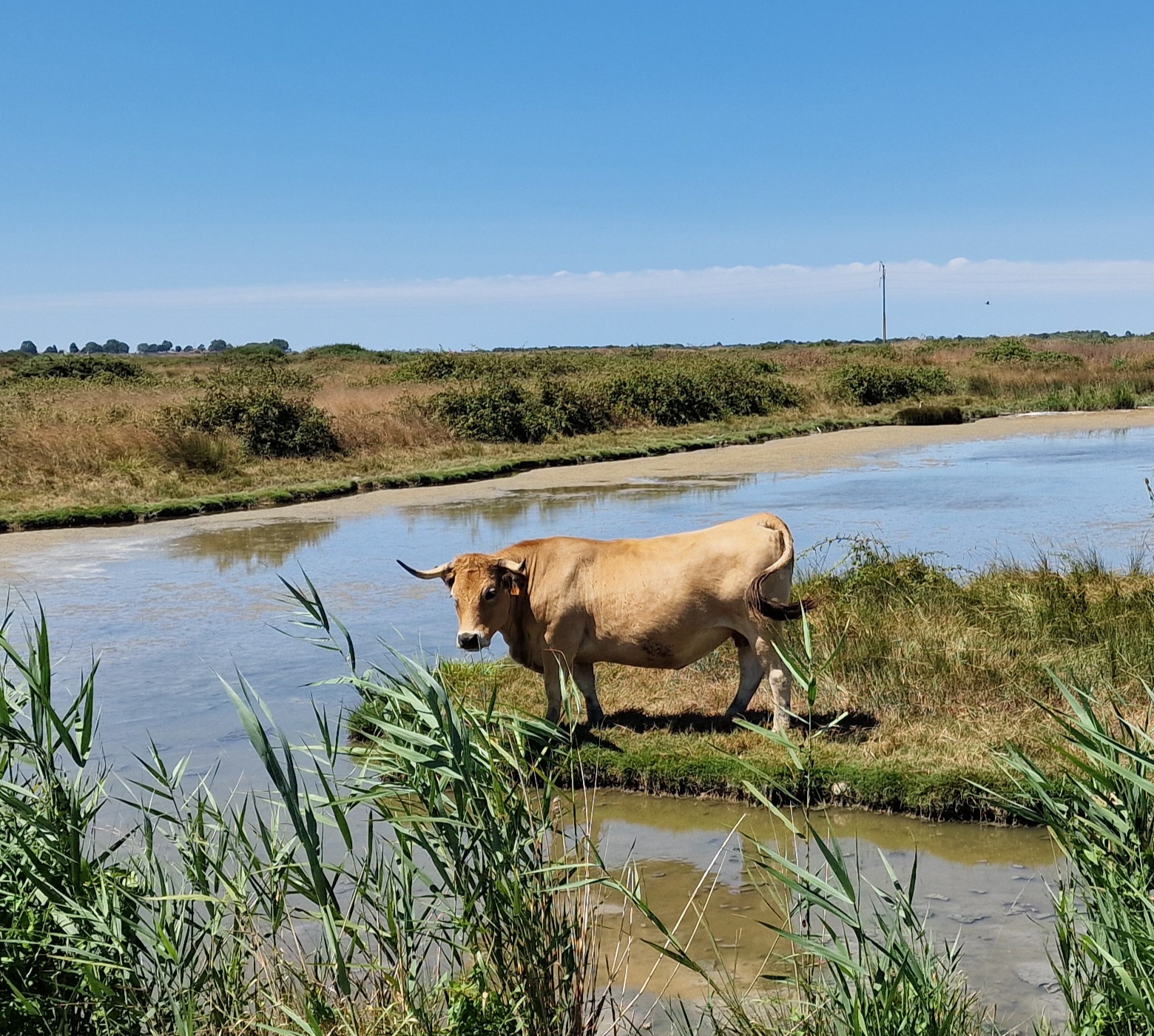
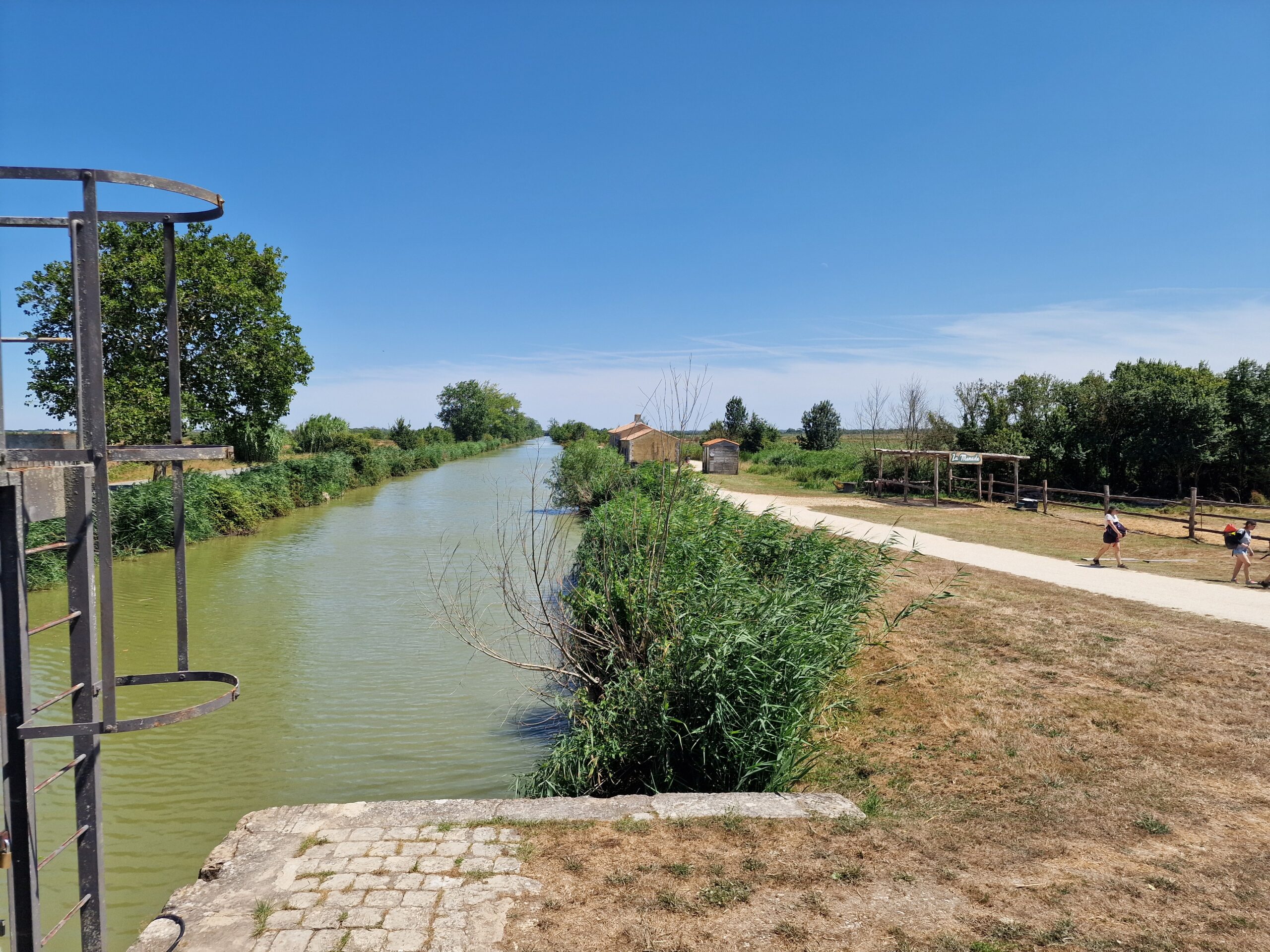
I now cycle across very flat marshland with a strong headwind. It’s quite a remote place. I saw a heron, a sparrow hawk and egrets as well as little animals scurrying away into the muddy banks near the roadside. Here is one animal that just eyeballed me! I also encounter a disused canal
Eventually I near the outskirts of Rochefort. I come to a second challenging bridge, and I decide that I’m not going to take this one because of the high winds.
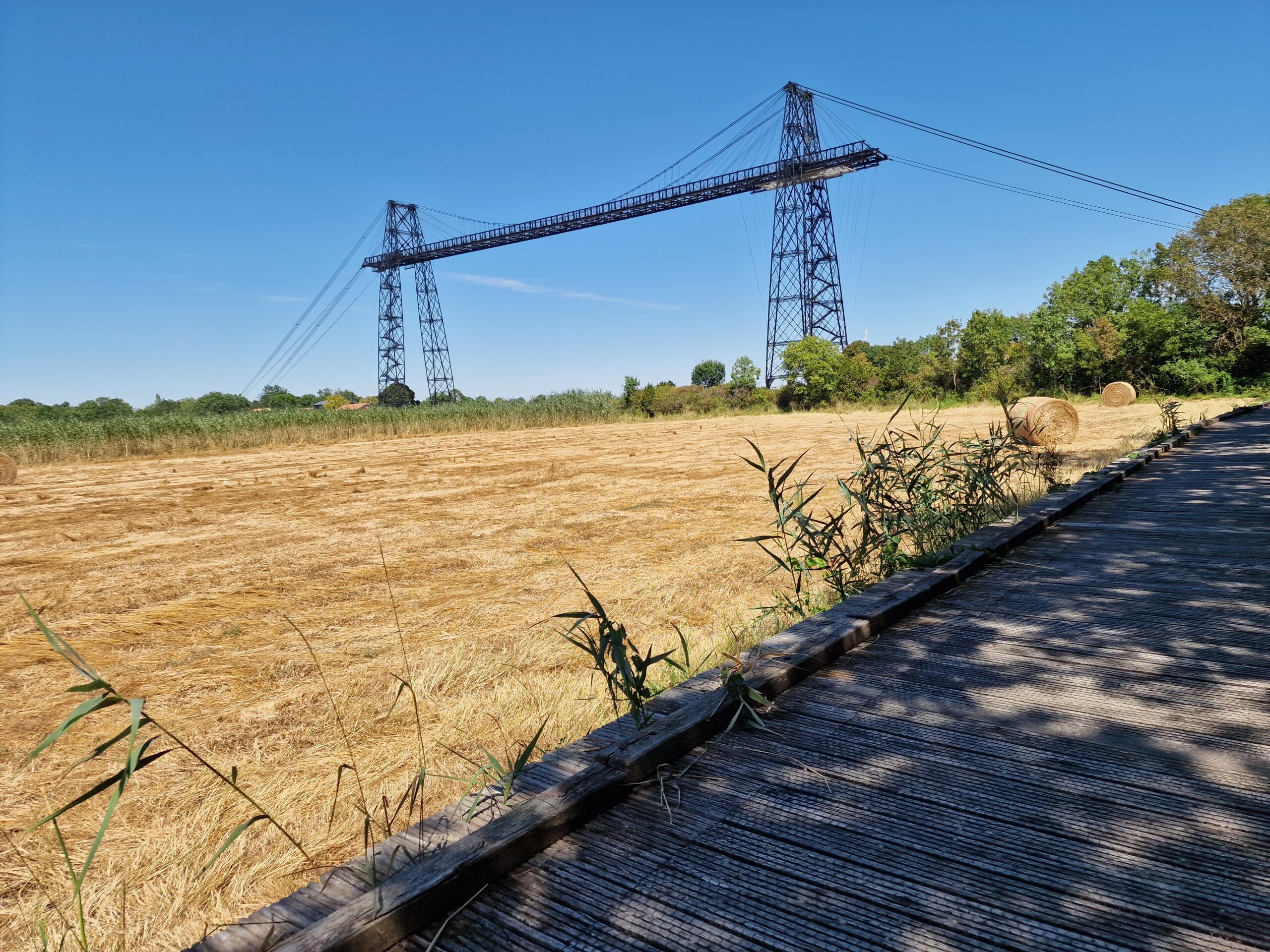
Eventually, I find a sign saying, “To the transporter bridge,” and I think, “Well, that’s got to be a better alternative than being blown about up there.” So I take the signpost, and eventually I have to ask a couple of army guys if they can direct me, and they were very helpful in showing me the route to the bridge.
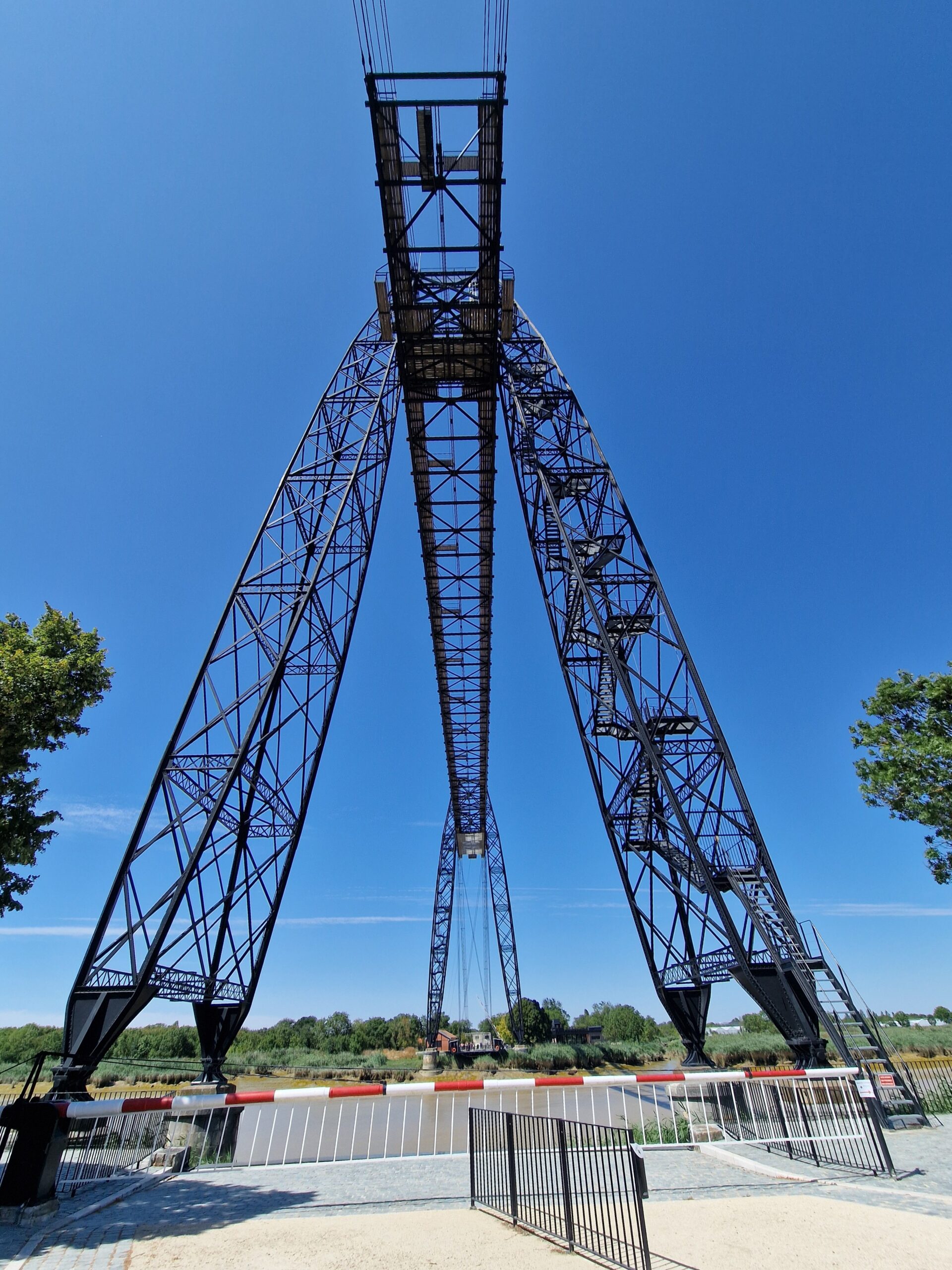
The very last Transporter Bridge in France.
This is a wonderful construction, and I’m so pleased it’s now being preserved, albeit just for cyclists and pedestrians. A much safer way to cross the river, and very enjoyable. Check out this short video:
Having crossed the transporter bridge, I followed the velo route alongside the river right into the centre. The cycle path takes you into the old naval port, which is fascinating.
From the local tourist office:
The Transbordeur Bridge is a landmark in Rochefort Ocean which spans over the Charente river, between Rochefort and Echillais. Figure head of the the Grand Site de France “Estuaire de la Charente – Arsenal de Rochefort”, it is an emblematic structure. Fully built in iron, steel and cast iron, the bridge may remind you of the Eiffel Tower ! A true technical feat, it opened in 1900. This structure of the French engineer Ferdinand Arnodin, was operated until 1967. Listed as a Historic Monument in 1976, it resumed service in 1994 for pedestrians and cyclists.
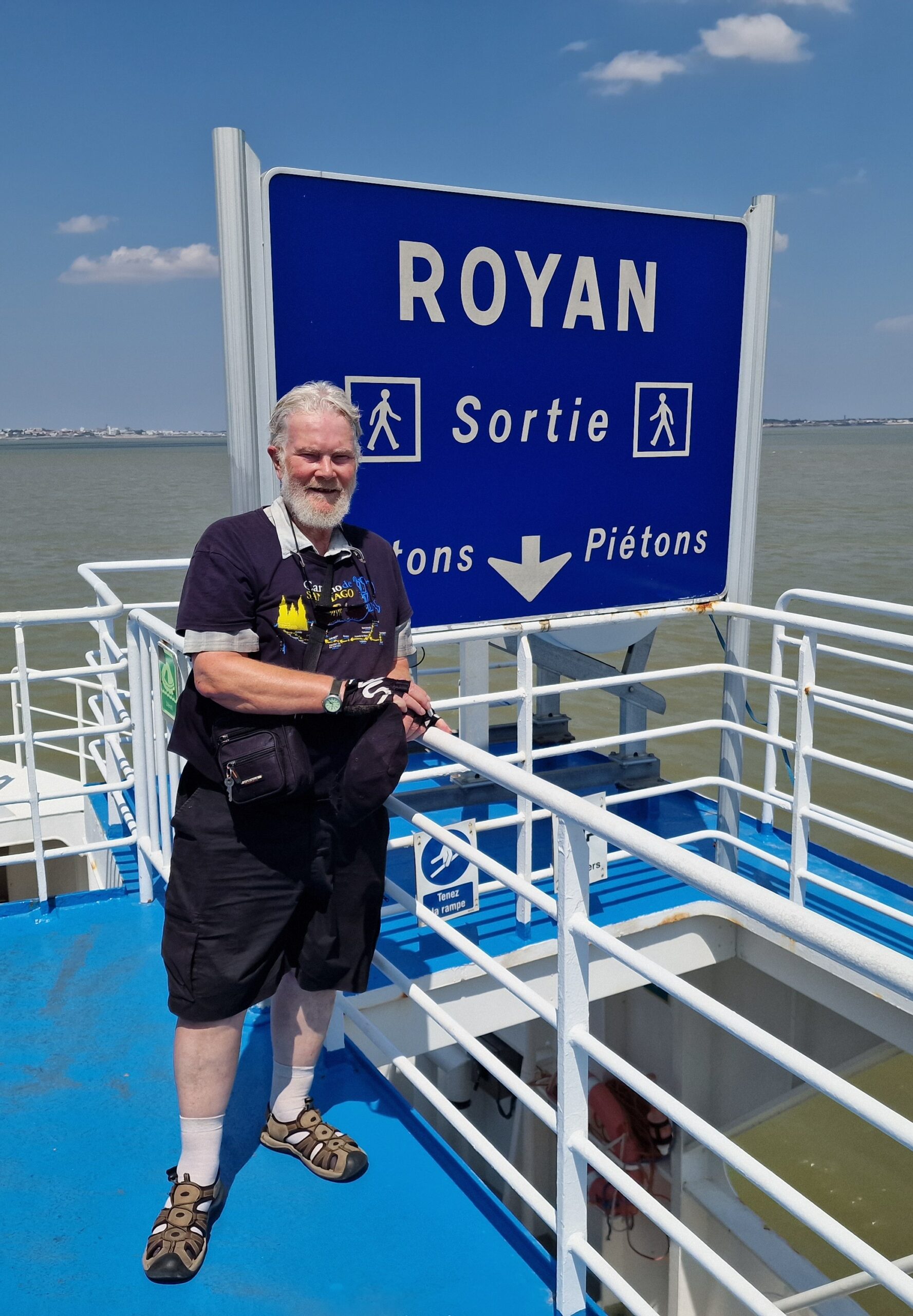
Today, I caught up with my friends, Joy and Greg, on the way from the small village where I stayed south of the River Gironde up to the Pointe de Grave , where the ferry takes one across to Royan.
One of the may lighthouses that a situate on the coast
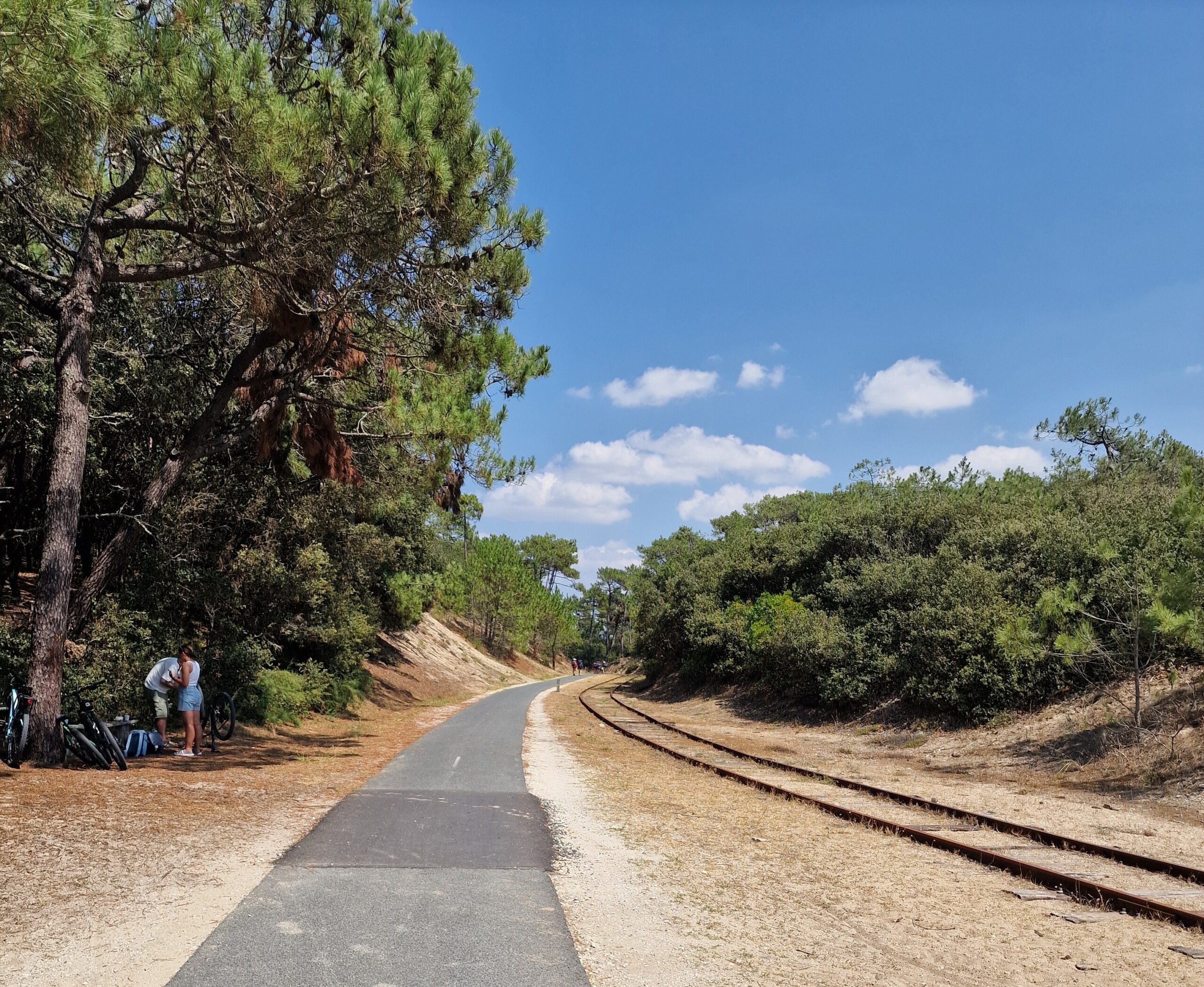
On the way up I came across what I suspected, – an old railway line and this one still had the tracks in situ. I’m not sure of its history but I believe in more recent years it has been used as a tourist railway I’m not sure if it still operating
There was no problem about taking my bike on this ferry because this was a large ferry, which could take cars and bicycles without any problem. But it was very pleasant crossing the mouth of this great river. Not a long journey, but I was glad to get over long stretches of cycle paths through pine forests.
Yes, they are beautiful, but it’s a long way from Biarritz up to this point on the River Gironde. I didn’t realize how much energy it would sap from me. Once in Royan.
I was able to find my hotel and meet up with my friends for dinner.
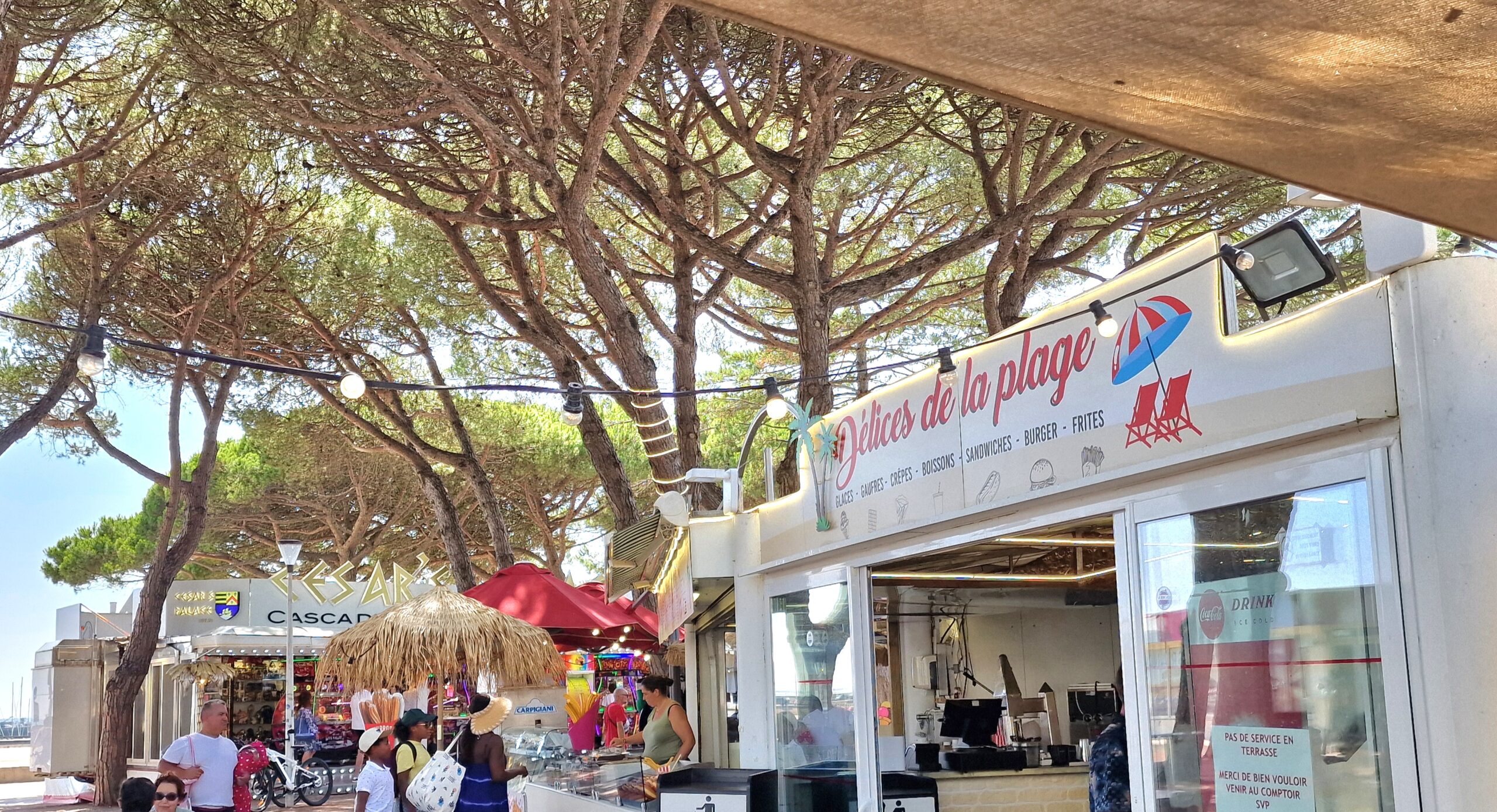
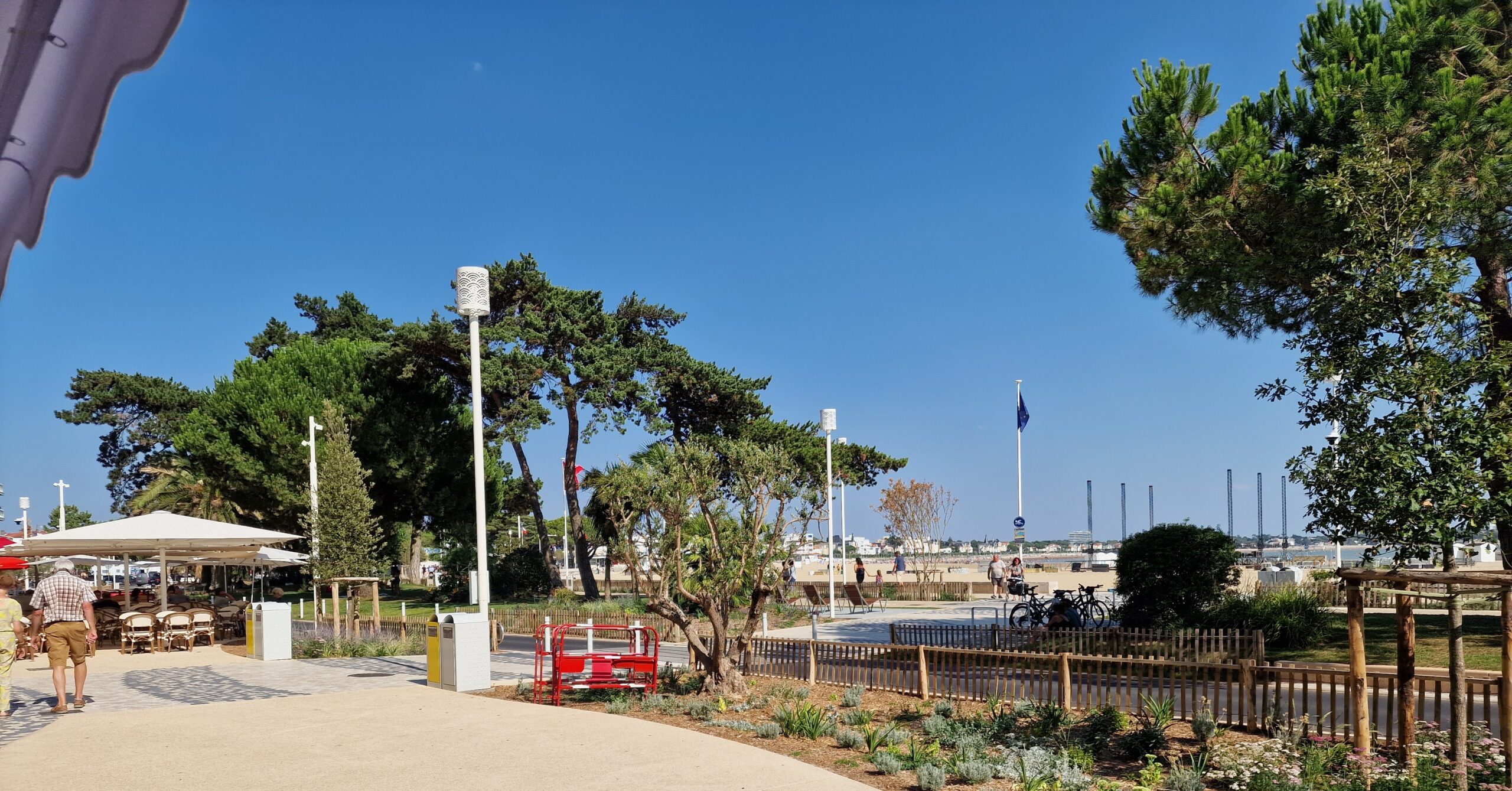
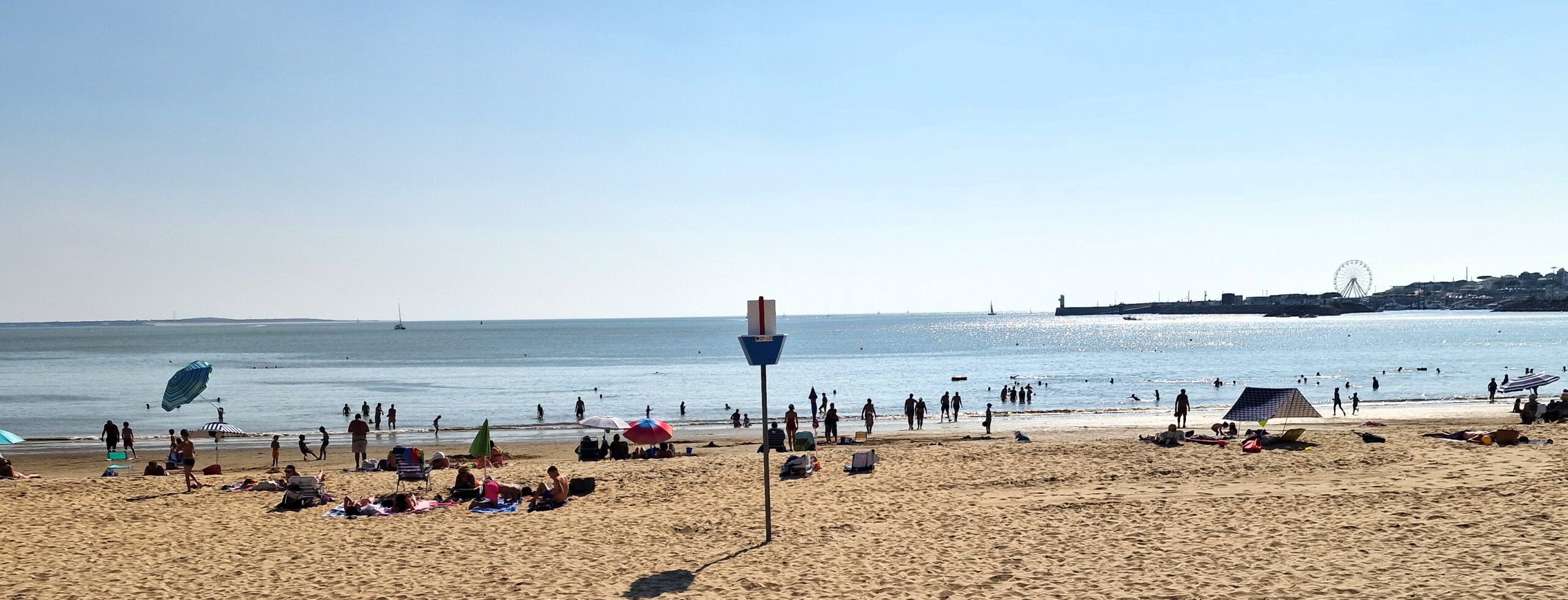
Photos below: show part of Ryan which is a very popular and busy seaside resort
Again it was hot at 29 C in the shade! I was shattered when I got to my accommodation and my battery had virtually run out at 8%
Today, I cycled part of the way with the cycling buddies, Joy & Greg, who I had met on the ferry to Bilbao. They are an amazing couple. They cycle all over the place on long bike rides across Europe and this one is no different. They are cycling much of the same route as mine, – from Bilbao into France and then up to Saint-Malo.
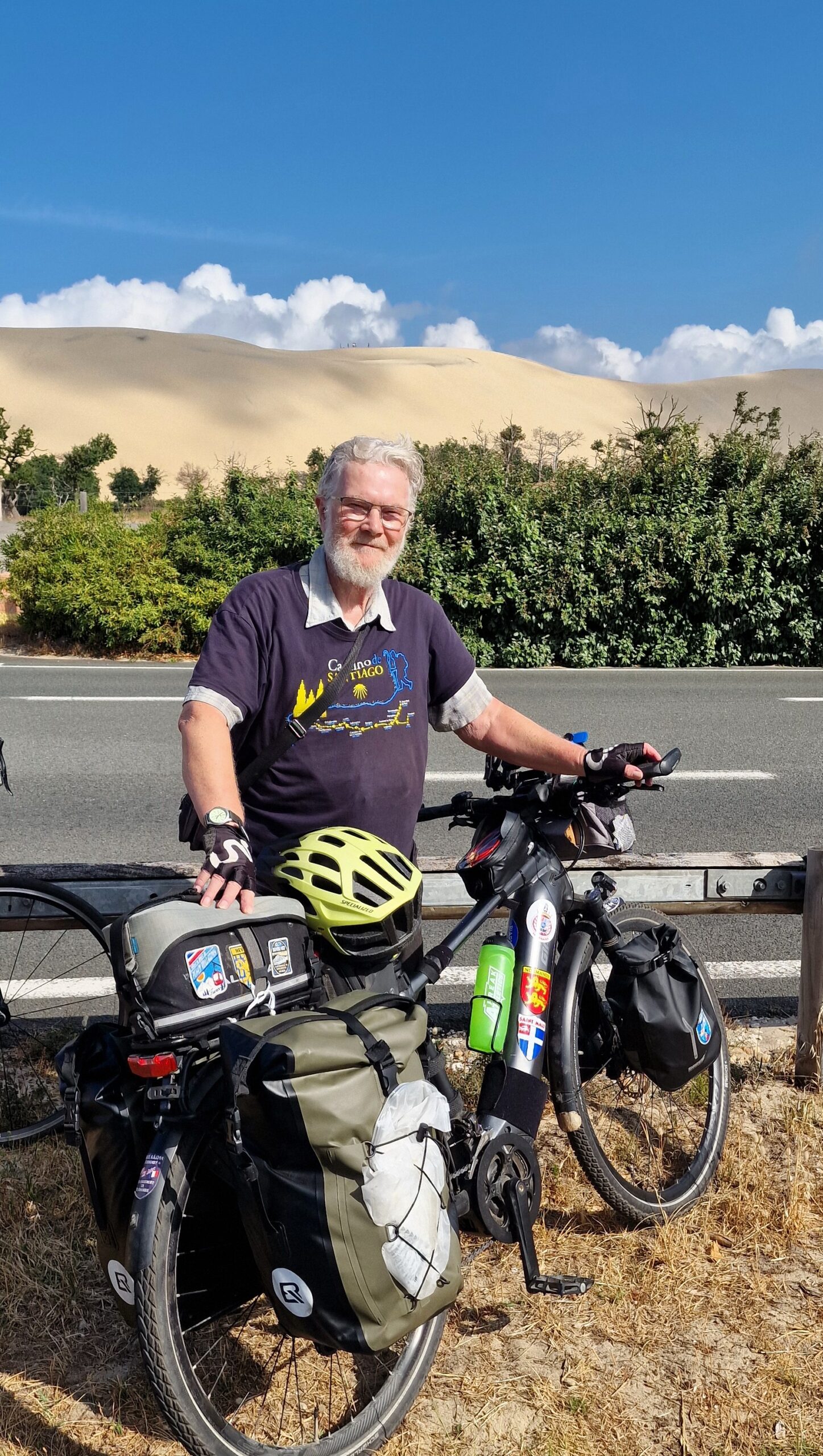
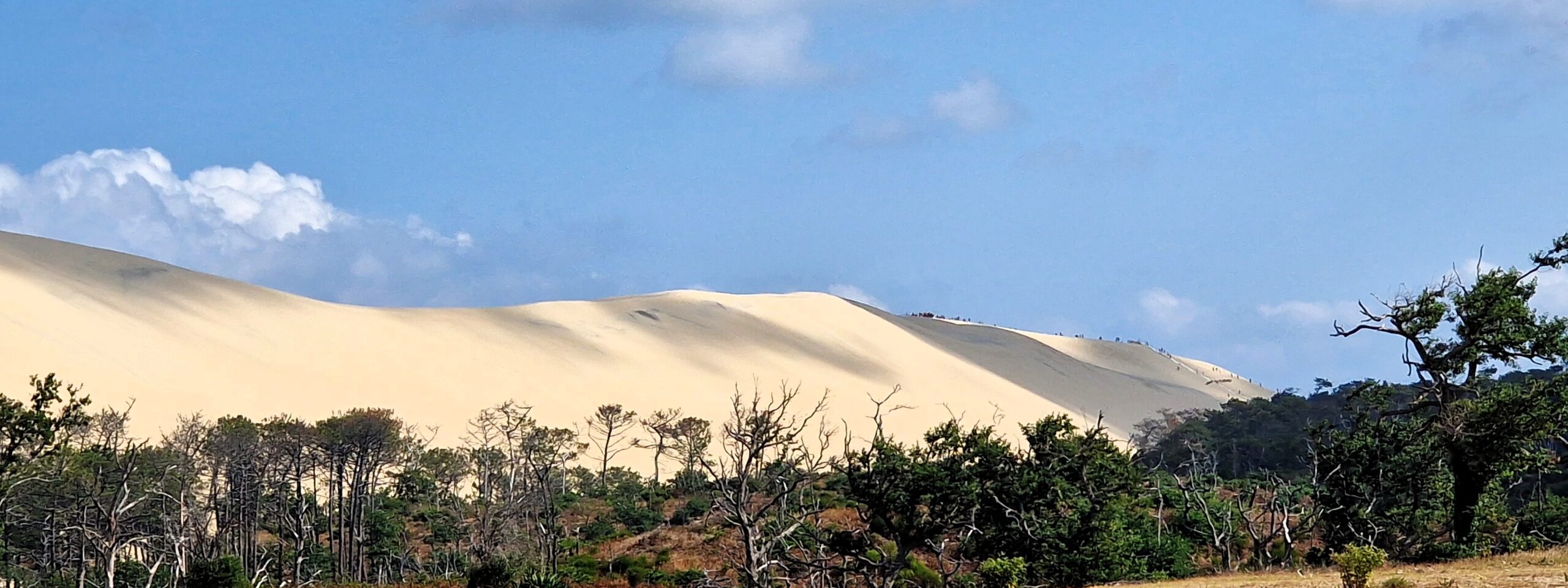
Dunes near Arcachon
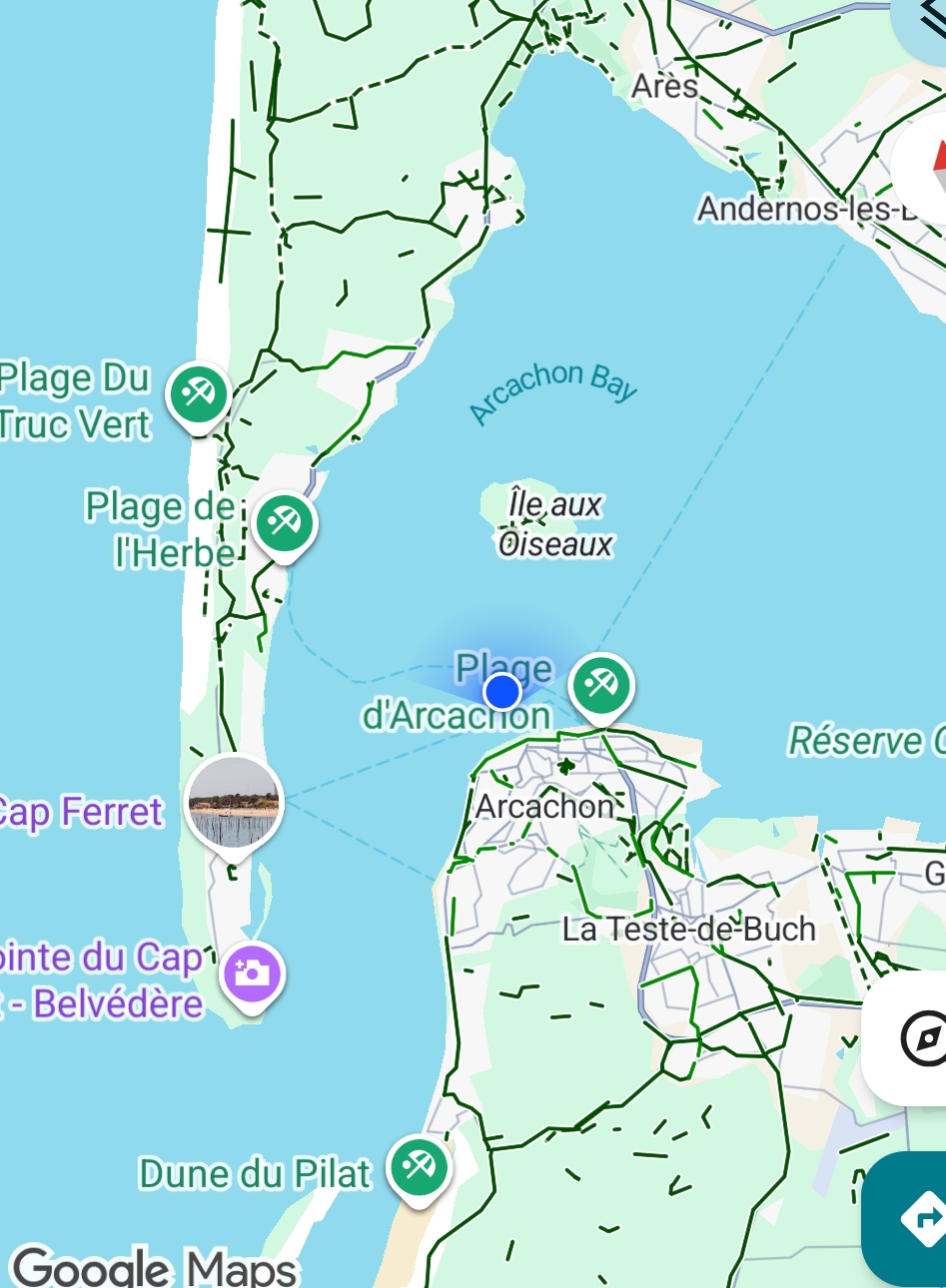
Today we cycle past the great sand dunes, which this part of France is famous for. We eventually got Arcachon just intime to get the next ferry. It makes a good shortcut onto the next stage of the western cycle route EV1 up the west coast of France.
If we hadn’t taken this ferry, it would’ve meant a detour of probably about 40 km. There was some discussion by the boatmen as to whether they were willing to take my heavy bike on the ferry, but after taking all of the bags off, they eventually agreed to hoist it up on the roof of the small ferry. Thank goodness!
Aboard the small ferry
This area is famous for oysters, and as soon as we arrived on the northern shore, we sought out a very nice, informal restaurant with a table in shade. And we had oysters!. Not ours, but this photo shows a chef obviously ready for a meal in a first-class restaurant nearby.
The route continues through pine forests again, with our friends the cicadas noisily keeping us company. I left my friends turned inland around one of these vast lakes that this area is known for. Unfortunately, when I got to the cycle path, which would take me up north alongside a big lake, was closed, and I had to make a large detour and cycle on quite a busy road. However, the motorists were all very kind. There was no problem. It was just a bit noisy.
I was shattered when I got to the bijou accommodation, but the hotelier was very helpful. Nathan had been living in France for 30 years. He soon went off and got me a pint. He even booked a table at a restaurant in the village. Great meal! Thanks to Nathan!
54 km and 274 m of Ascent. Sill very hot – C in the shade!
Today, I couldn’t manage too much. I was having to have a slower day because of the consistent heat all the time. The route was, as before, through pine forests and sometimes alongside vast inland lakes. Here is one.
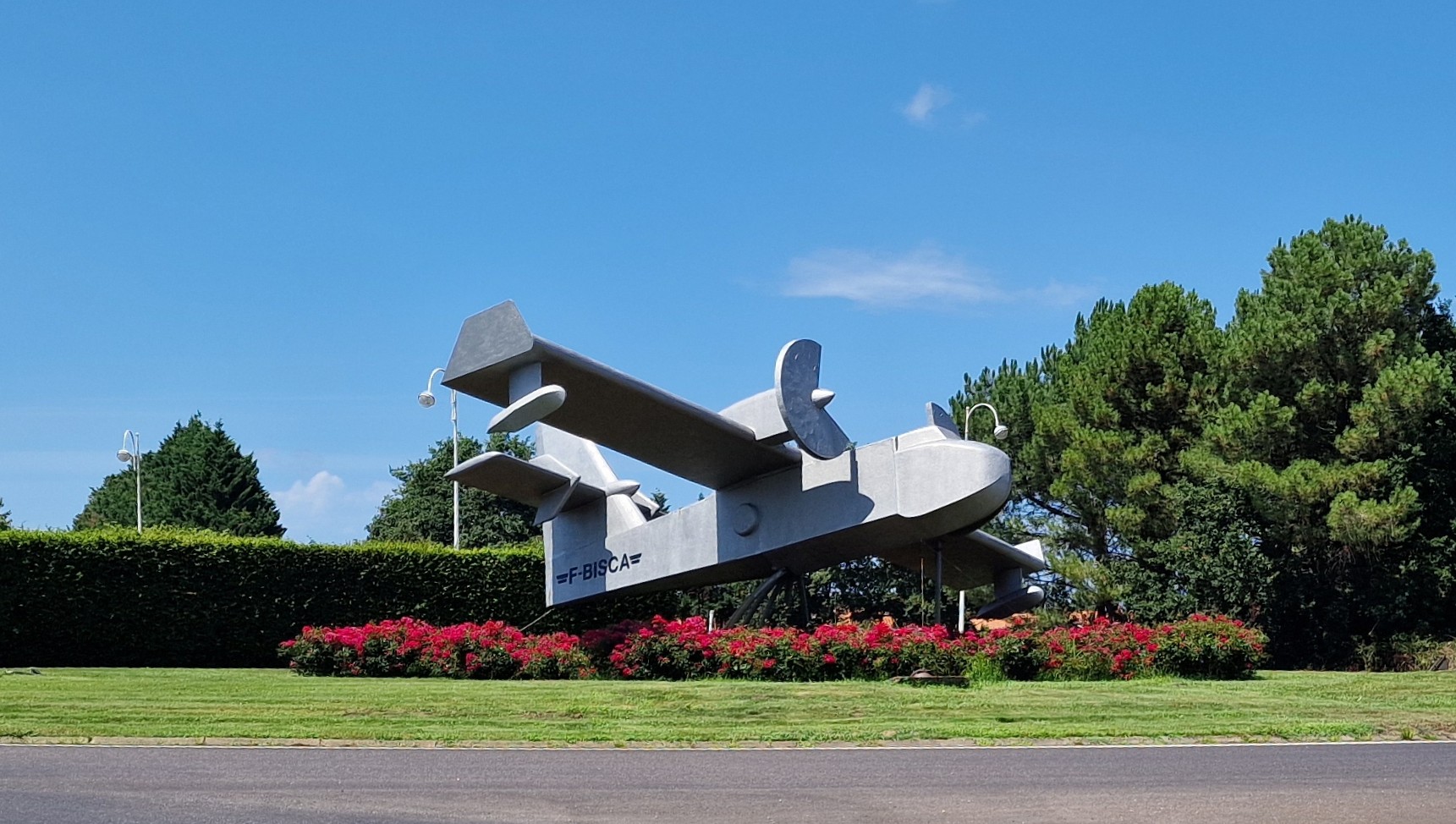
I believe this was where the flying boats in the 1920s and ’30s were tested and manufactured. The base was nearby Biscarrosse.
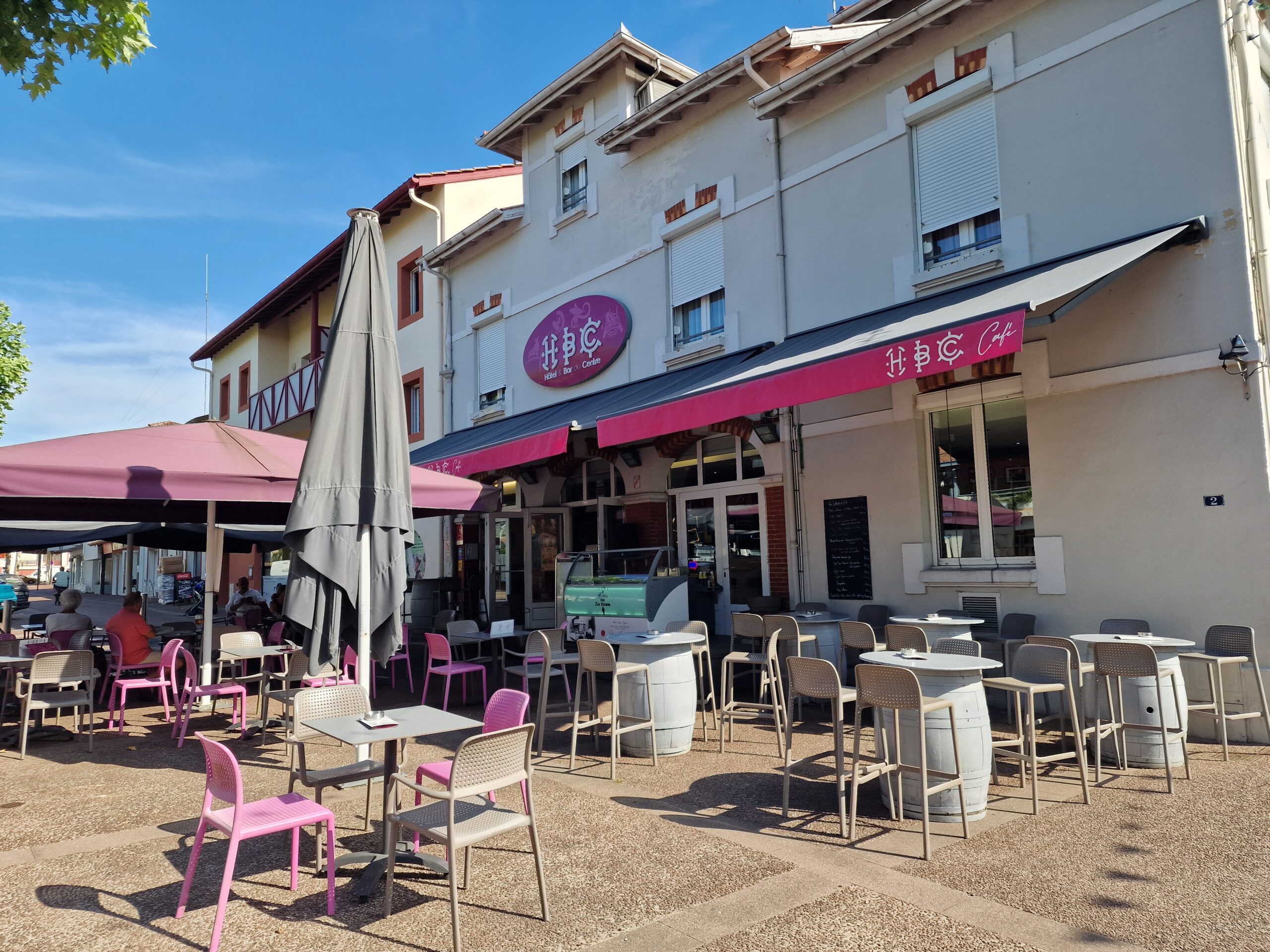
At the end of the day, I checked into a very reasonably priced hotel that looked dreamlike, but it was only a basic hotel, no air conditioning, no kettle in the room and no restaurant, just breakfast. Still, it was cheap compared to British hotels, and it was nearby to Biscarrosse-Plage, which was like a small version of Bournemouth.
76 km and 382 m of Ascent. Again it was 30 C in the shade!
Today was a day of mixed fortunes. This morning my intention was to simply join that Euro Velo route and continue up the coast when I left this morning. However, having got lost a couple of times and found that the original prediction by Garmin and Google were wrong in the sense that there was much more ascent than I’d imagined, and I made worse by getting lost twice.
The whole distance would have been, if I’d have completed it, about 120 km. I had to stop short of this at Mimizan in a small Logis B&B. I had some very long rides through the pine woods and listening to the cicadas on occasions becoming almost deafening. Here is how they sound:
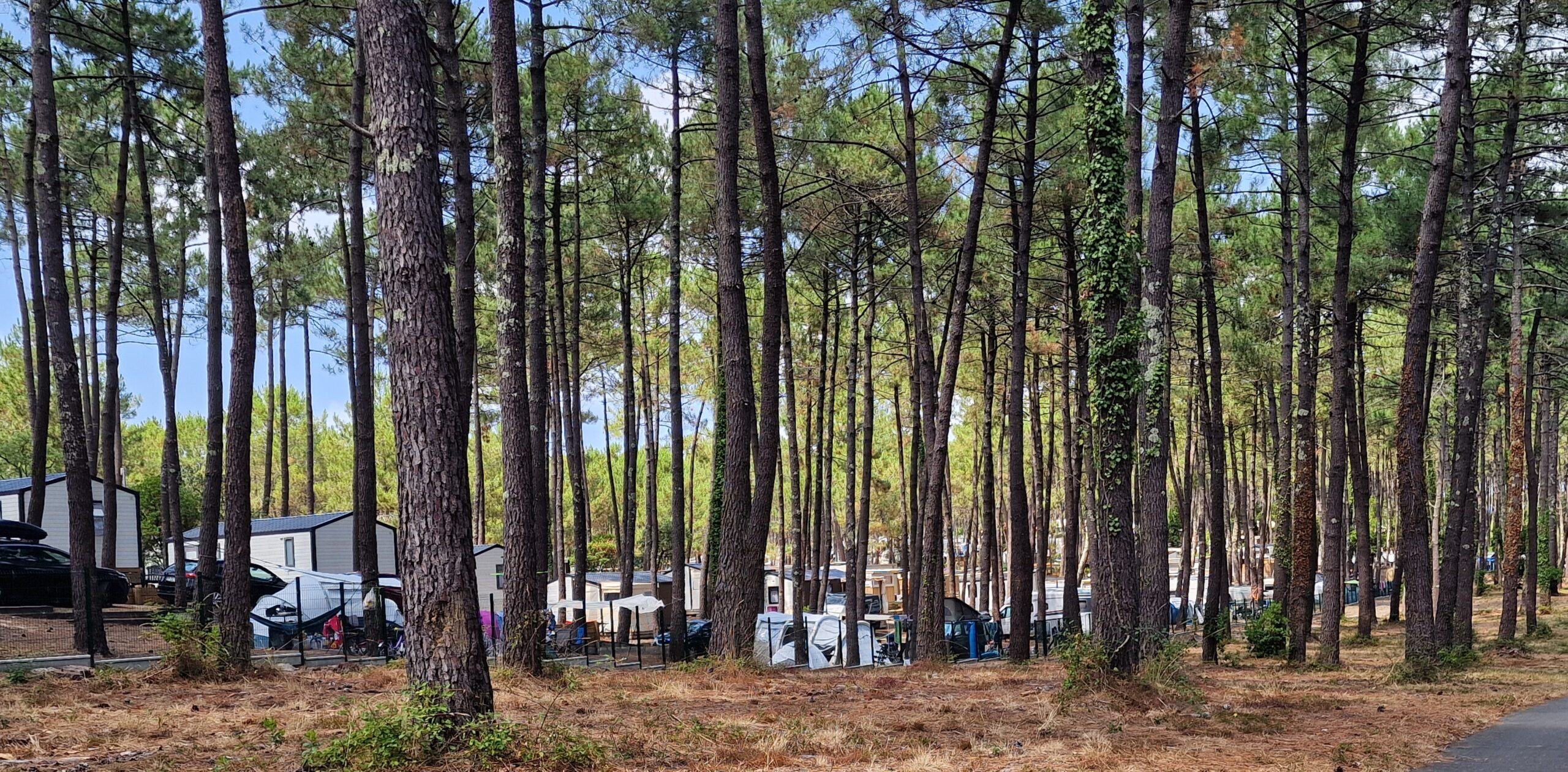
In the morning, I passed a number of campsites, and in one of them, I took a coffee, which was pleasantly served with cold water on the side. I didn’t ask for it, but the guy realized I was suffering from the sun a bit.
When I got lost for the second time, I thought, “Oh, well, I might as well take some lunch.” So I had a small lunch. But it’s interesting to note, once you’re in France, lunch begins at 12:00, whereas when you’re in Spain, lunch might not begin till 2:00 or 2:30.
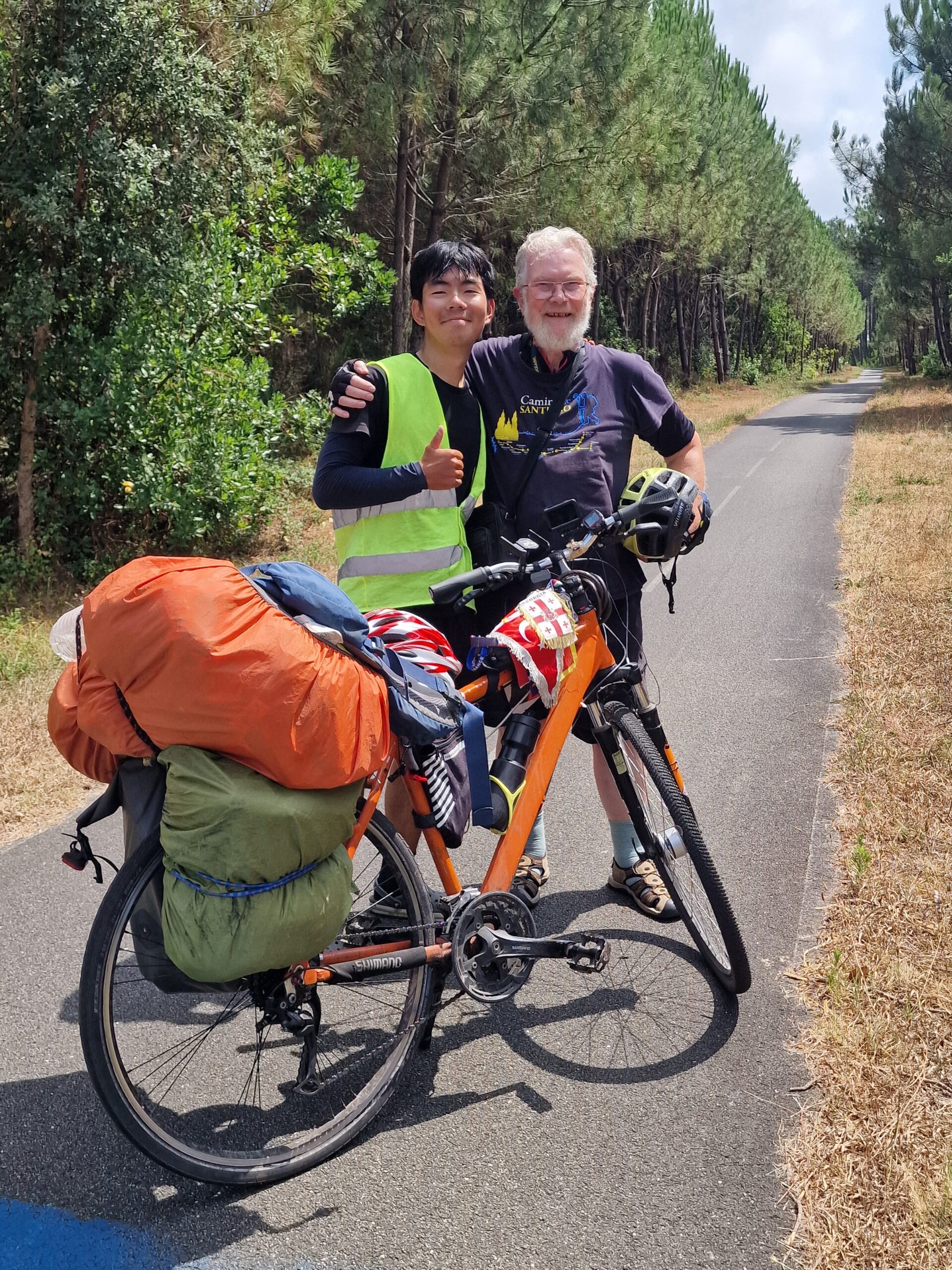
Kim Chansik cycling across Europe? 7,500 km completed and about 2000 km to go!
My route trundled on through the afternoon, more well-made-up tarmac pathways through the forest on EuroVelo Route 1, with lots of cyclists passing me by, both in the morning and the afternoon. At one point, I made a stop to check that I was actually still on the right route, and I met a young man from Korea. And believe it or not, he was cycling all the way from Georgia in Eastern Europe, all the way through Europe, initially all the way through Turkey, and all the way through Europe, and was making his way to Lisbon via Santiago de Compostela. An amazing journey. I think he said he’d already completed 7,500 km already! Here he is fully loaded with his bike, which makes mine look fairly lightweight compared to his. I asked him why he was doing it, and his reply was he wanted to cycle all the way through Europe from east to west. He was a very pleasant young man, and I’ve recorded a short interview, which the link is below.
81 km and 745 m of Ascent. Phew! and it was 30 C in the shade!
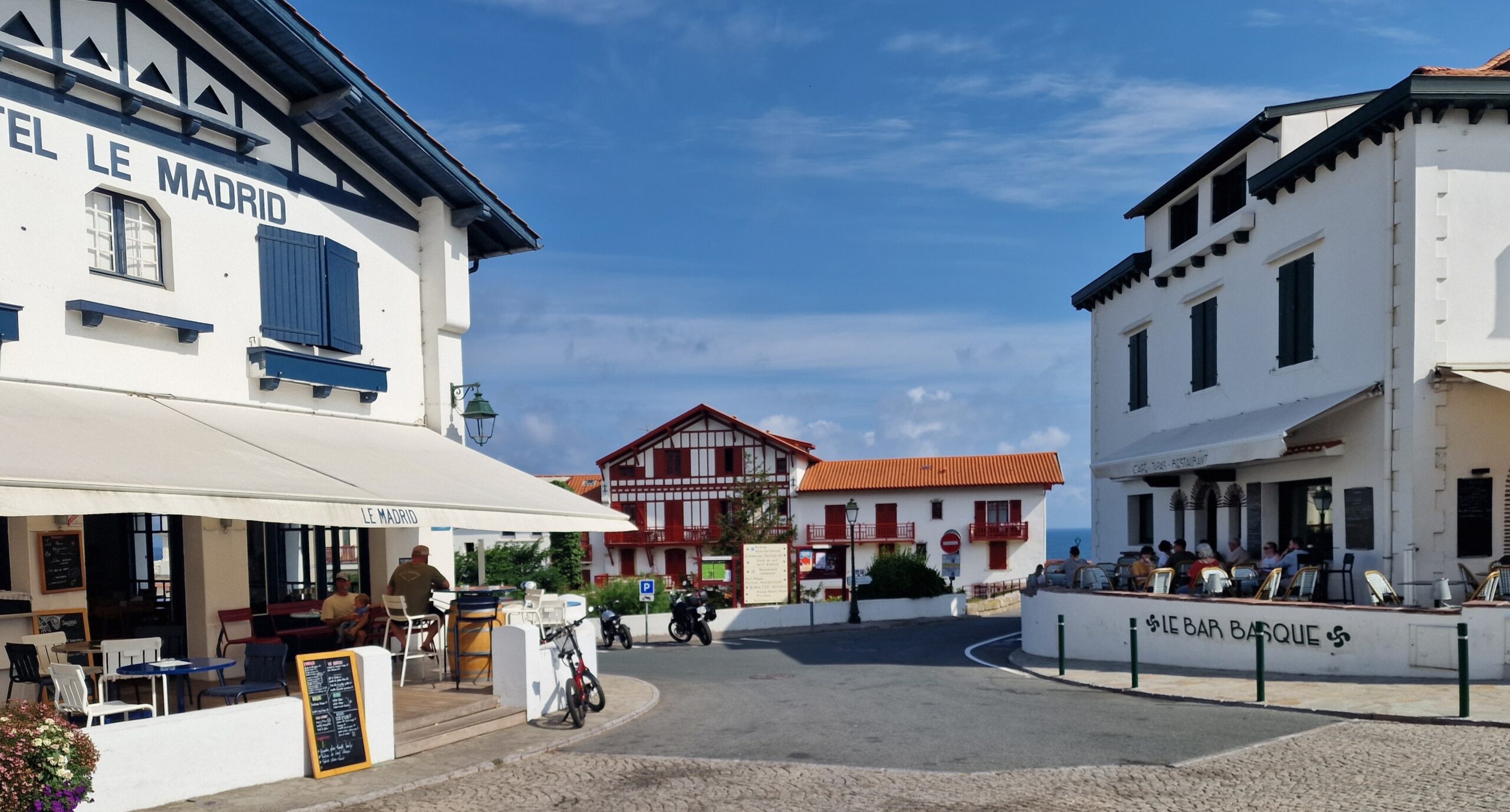
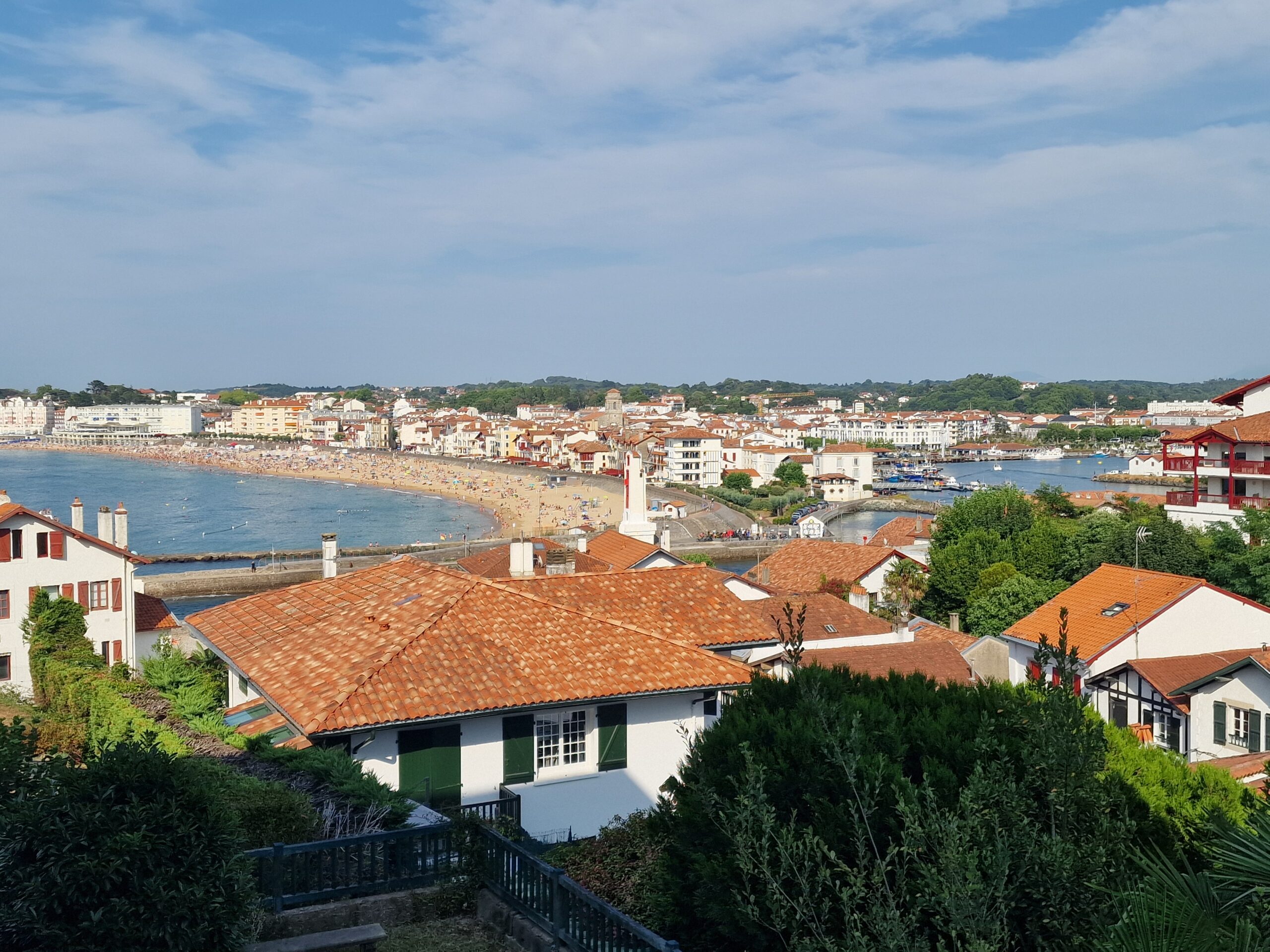
My route takes me from Ciboure to the inland village of Soustons via the ever popular Biarritz. Ciboure is an old village next to Jean de Luz, which looks beautiful in the sunshine.
Even though I am well into France now the area looks very Basque
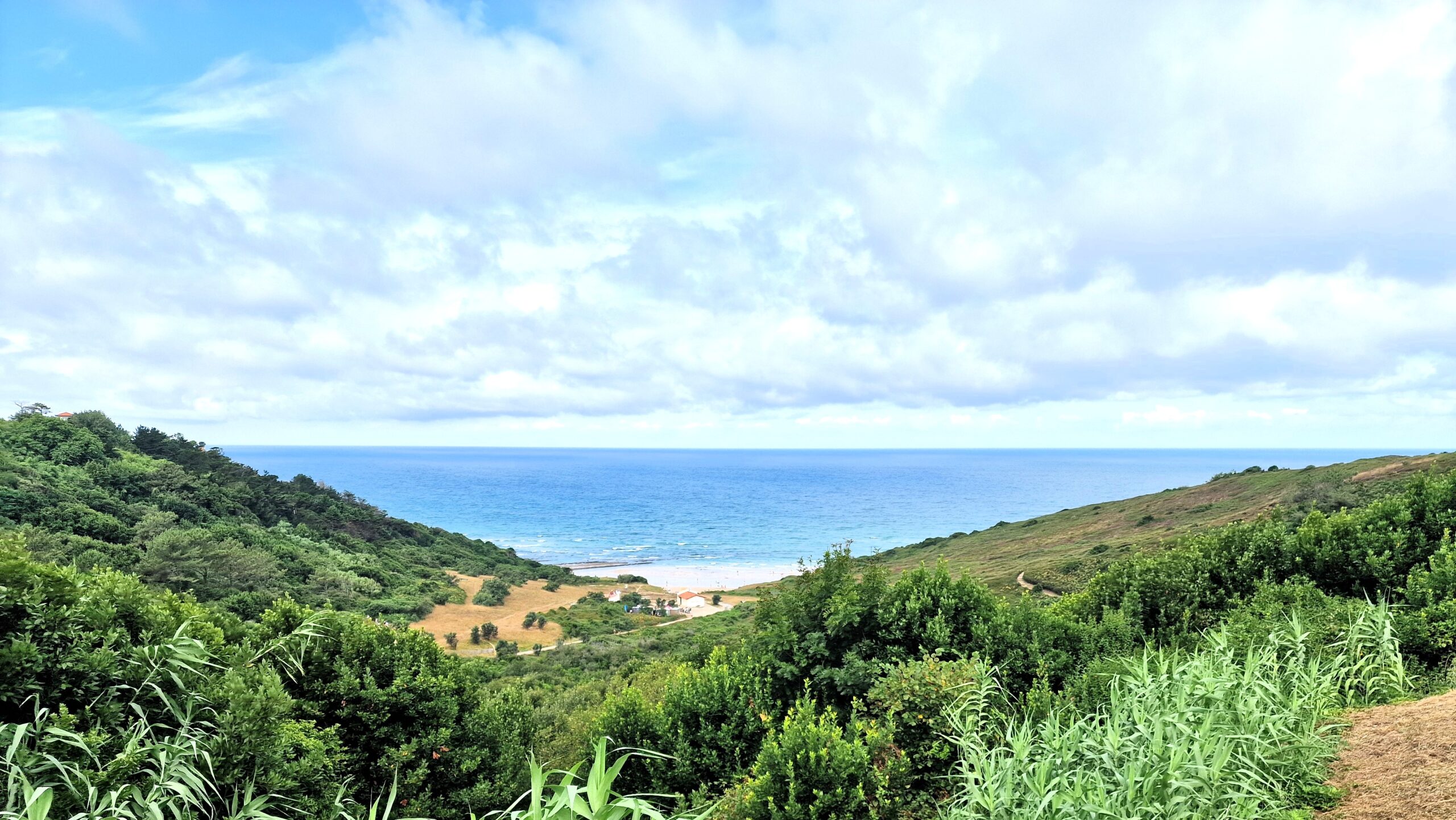
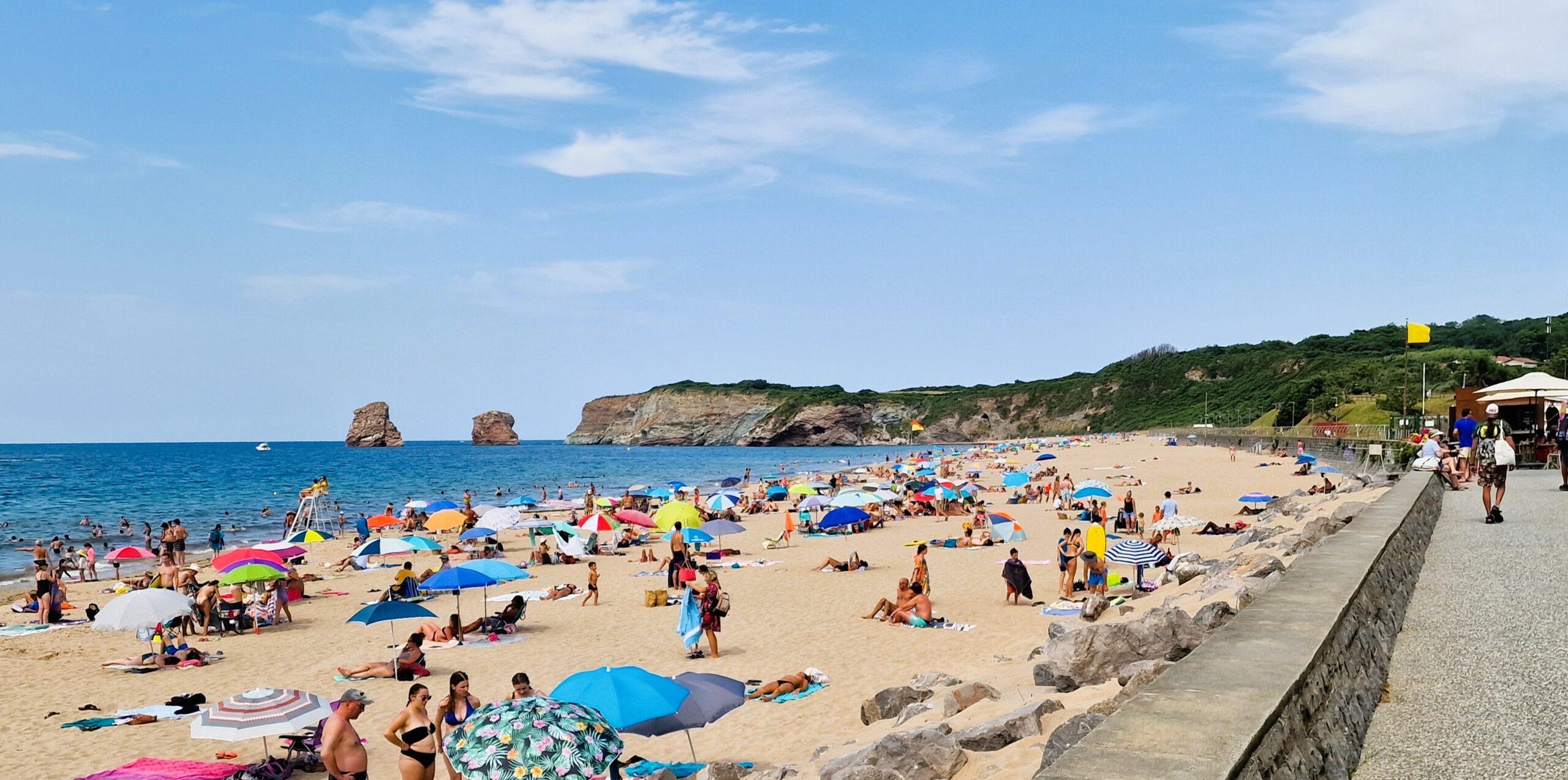
Again, lovely beaches. This whole stretch is dotted with beautiful places with sandy beaches.
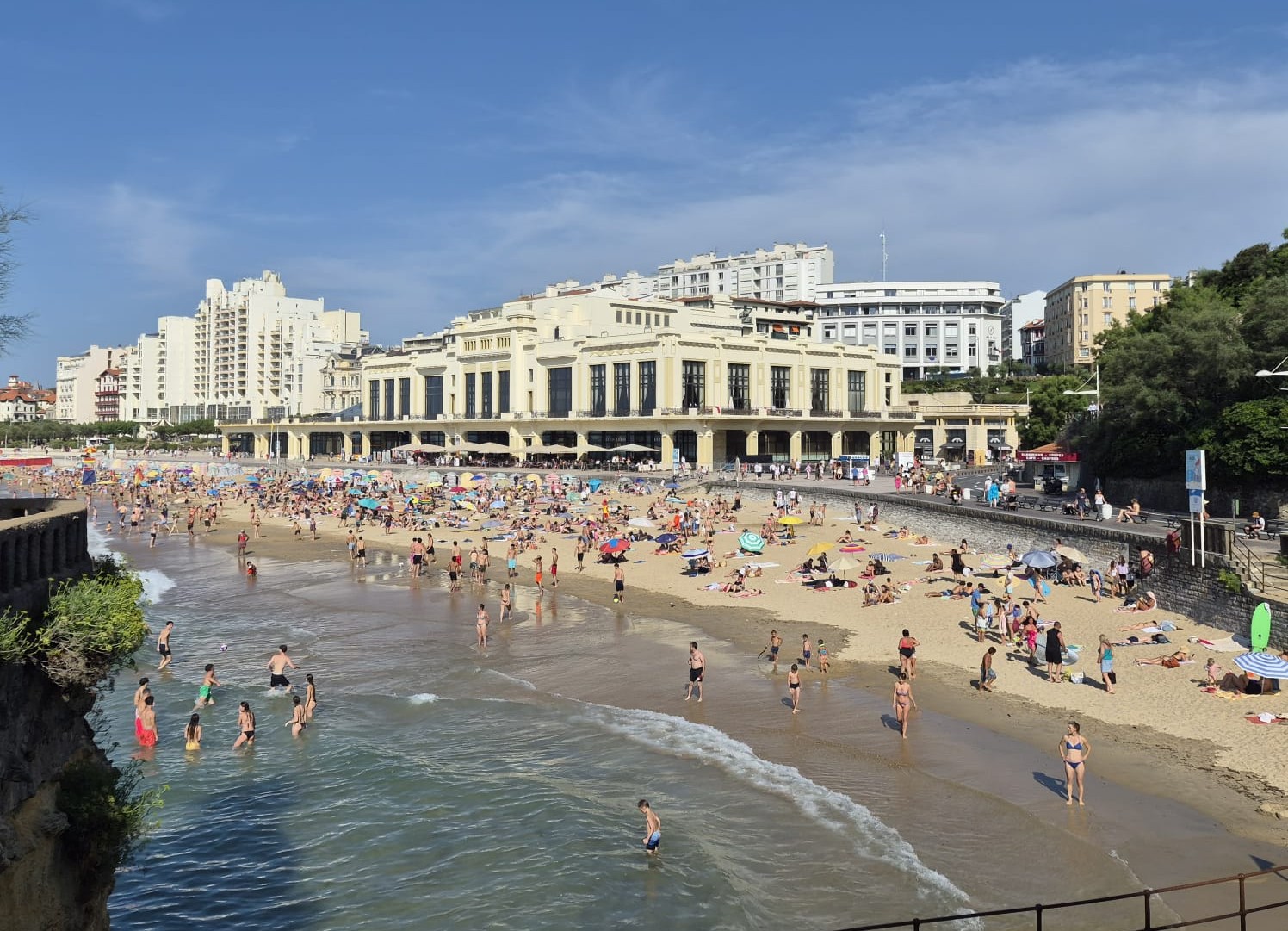
Biarritz look fabulous!
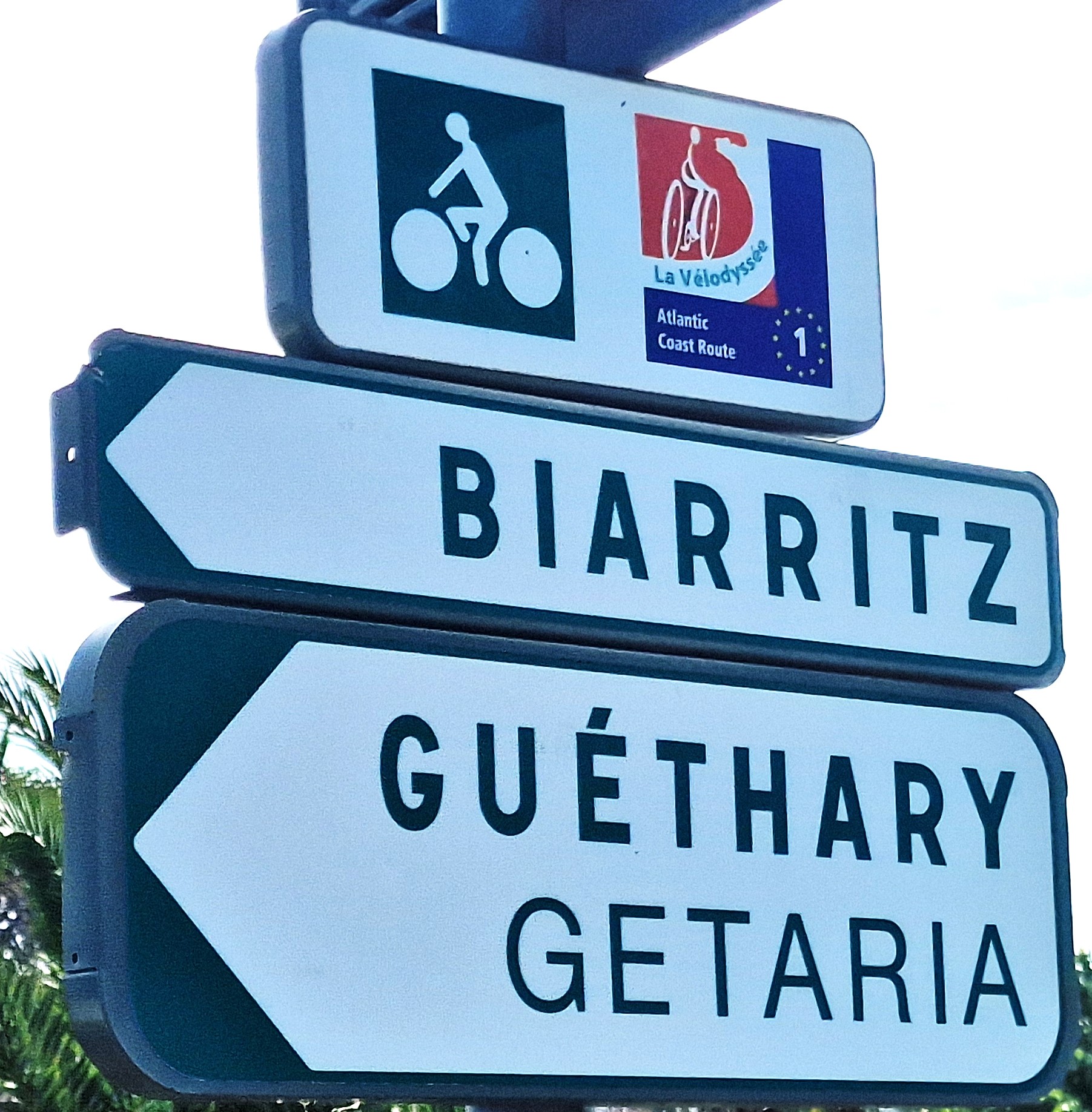
I got lost a bit in places, but eventually I found my way onto La Vélodyssée (Euro Velo 1). This route is some 1,300 km (800 miles) long through France. I’m not doing all of it but I guess I will be doing about 1000 km to San Malo. The route actually goes on to Roscoff in western Brittany.
I am soon in the pine forests which is typical of this long cycle route up the Western coast of France. After some while, I turned inland to a small town of Soustons. I stayed at a classic French commercial hotel in the centre, very hospitable, and had a wonderful evening meal sitting on the street in balmy temperatures.
Day 4: Saturday 14th July – San Sebastián to Ciboure and Saint-Jean-de-Luz
Today I travelled only 45 km but there was an ascent of 521 m. The temperature was at least 30 C.
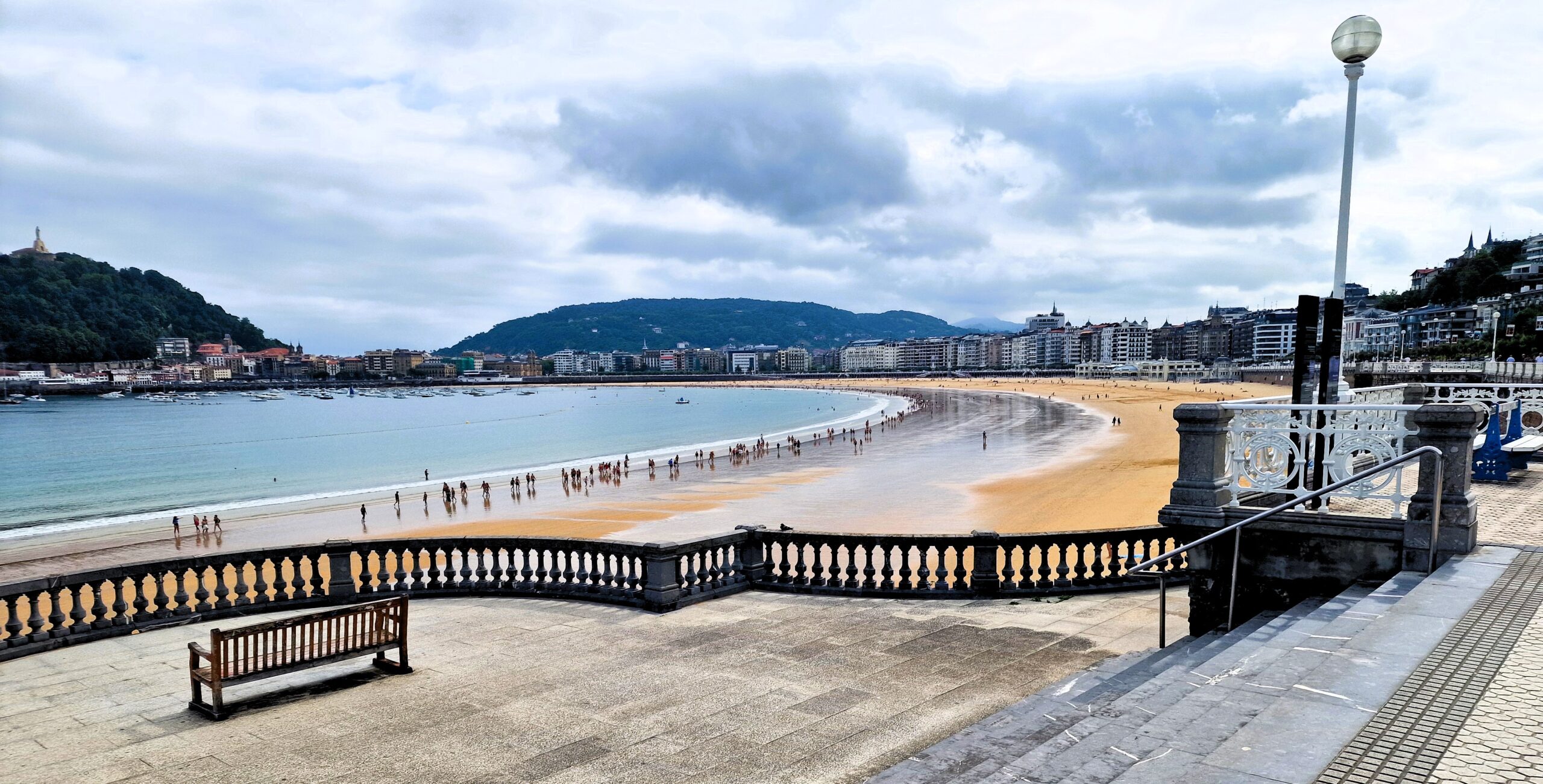
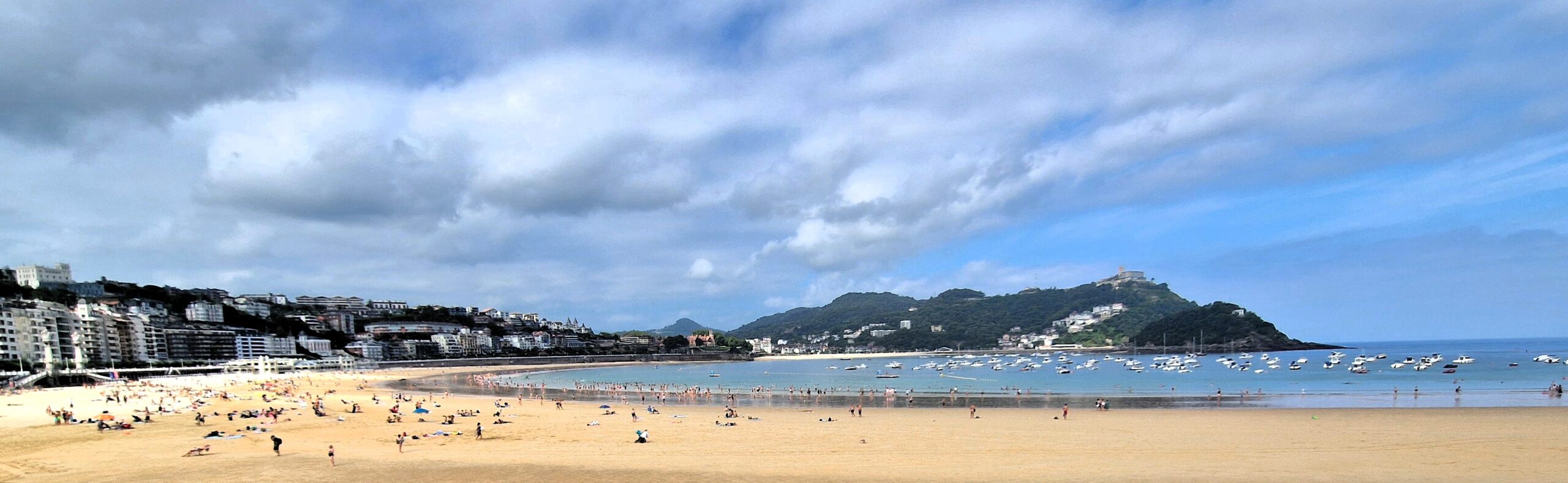
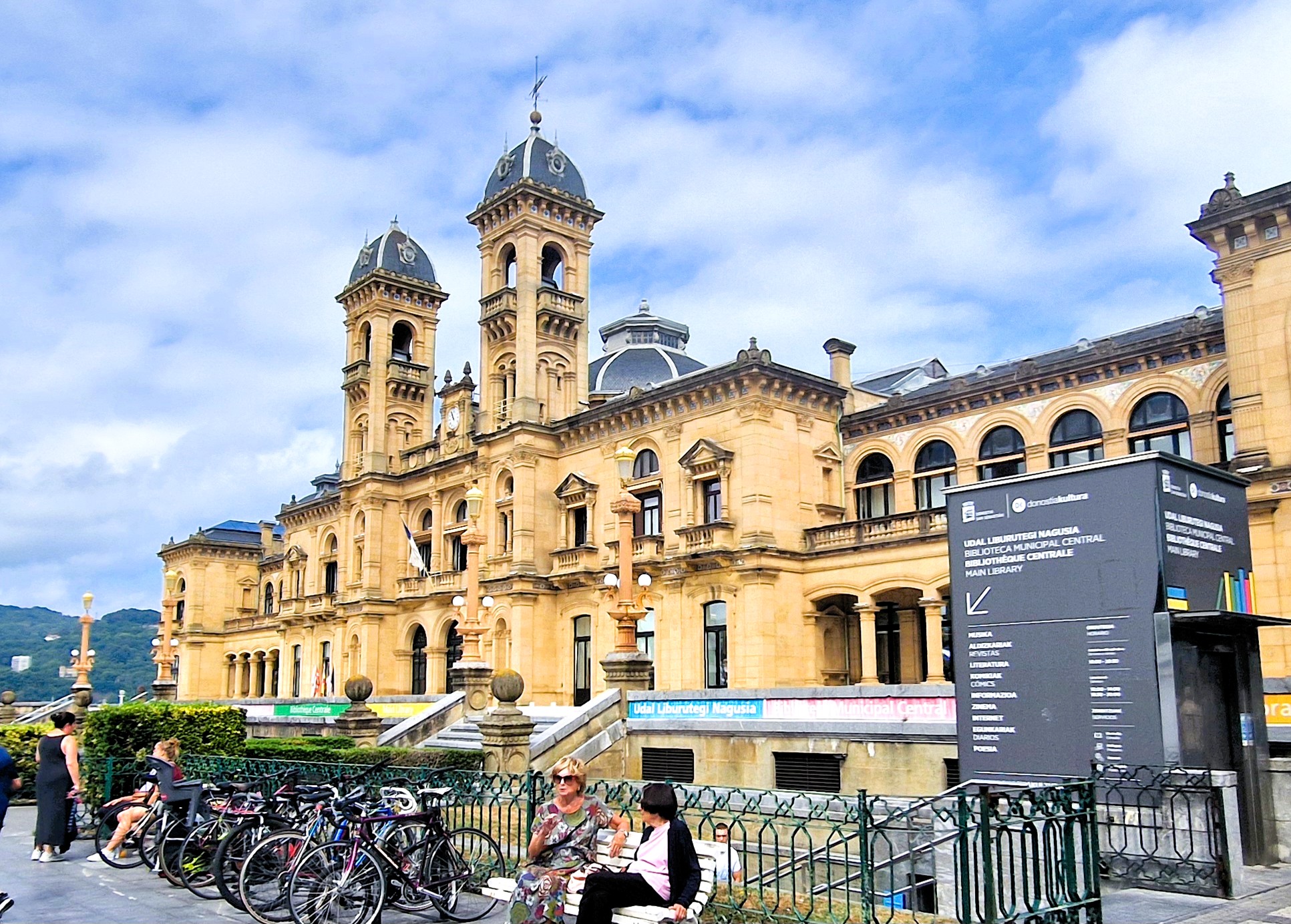
I leave San Sebastián behind with its beautiful buildings and wide sandy beaches, and head along the clearly marked cycle path northwards.
Above – Donostia / San Sebastián
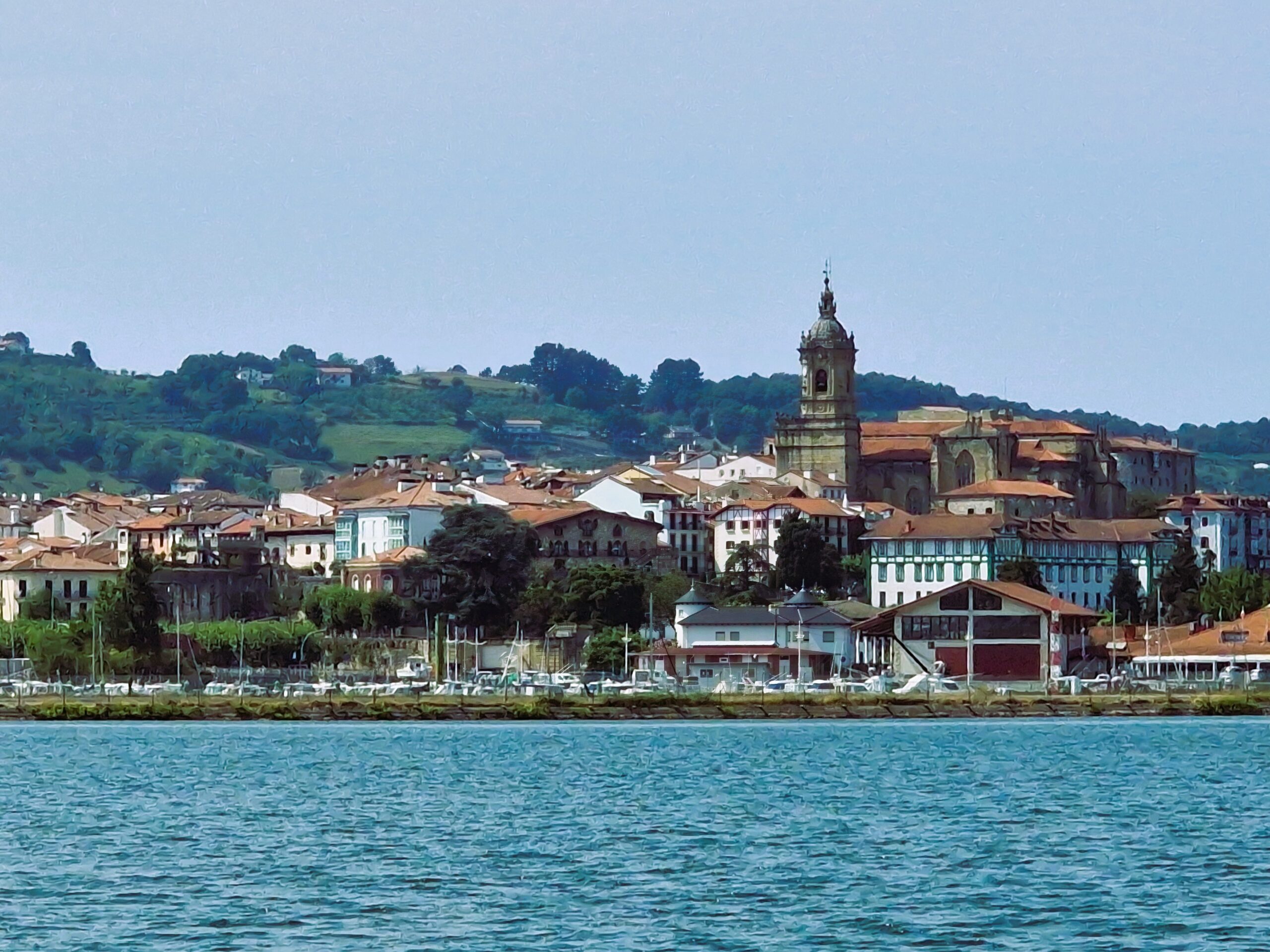
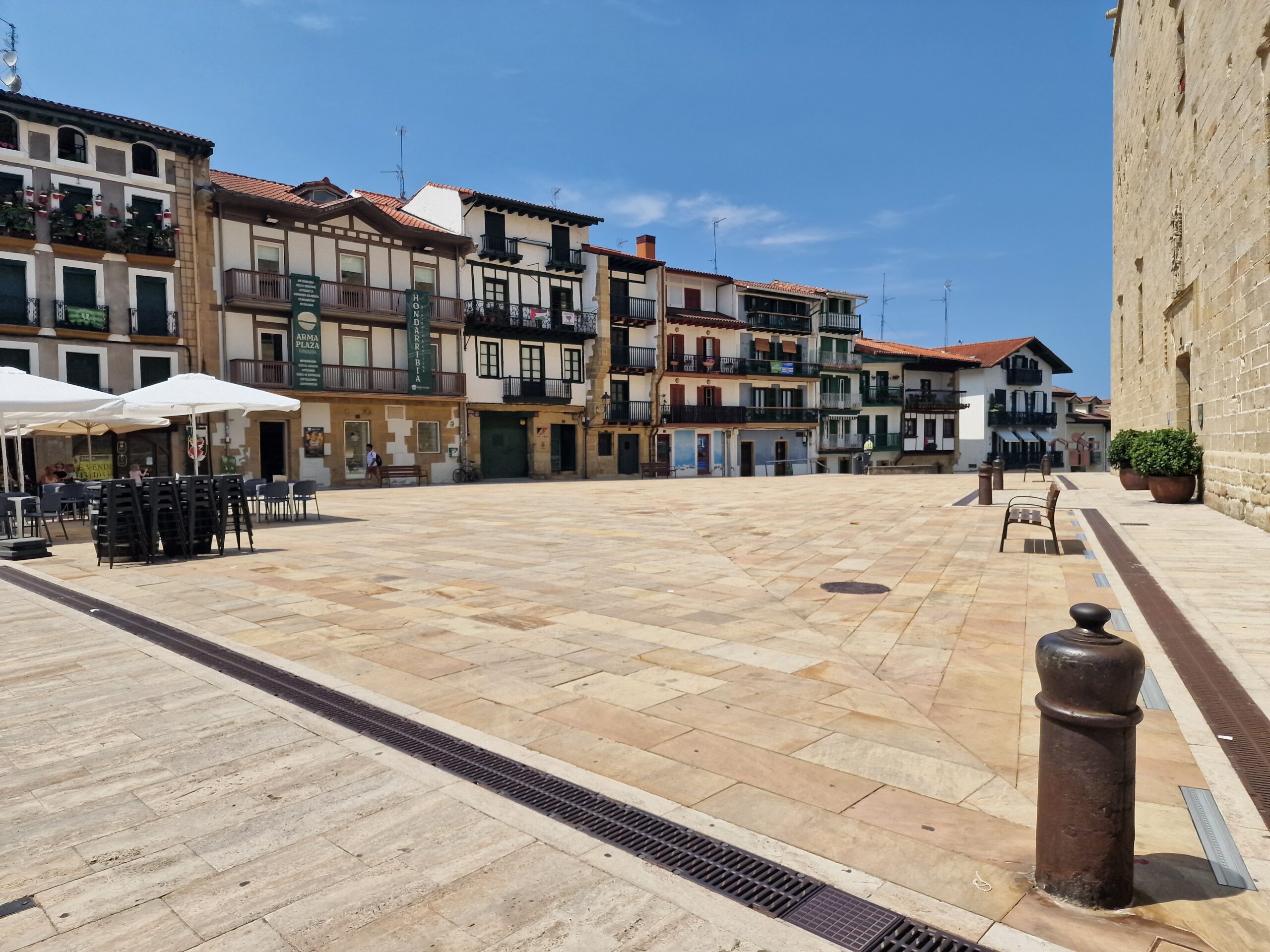
I particularly wanted to make a detour to Hondarribia, which is where Carol and I had an enjoyable evening some years ago during a fiesta there. No fiesta today, but it was good to see the old town set on a hill,
View from the riverVillage square on the hill in the old town
Above: Hondarribia
I crossed over the Puente de Santiago bridge, then followed the coastal path, which was very enjoyable.
Cycle path along the coast
Cycle path north
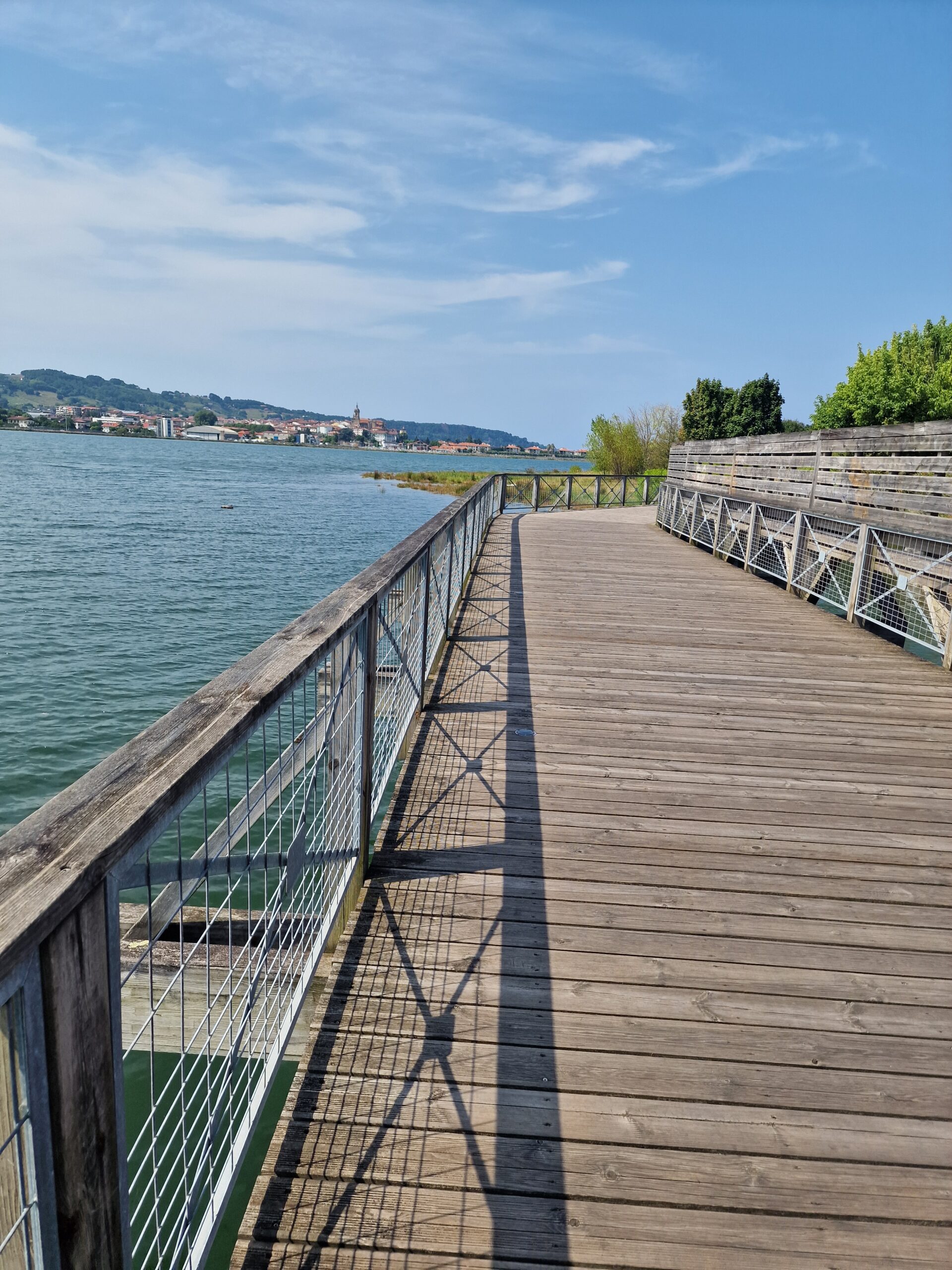
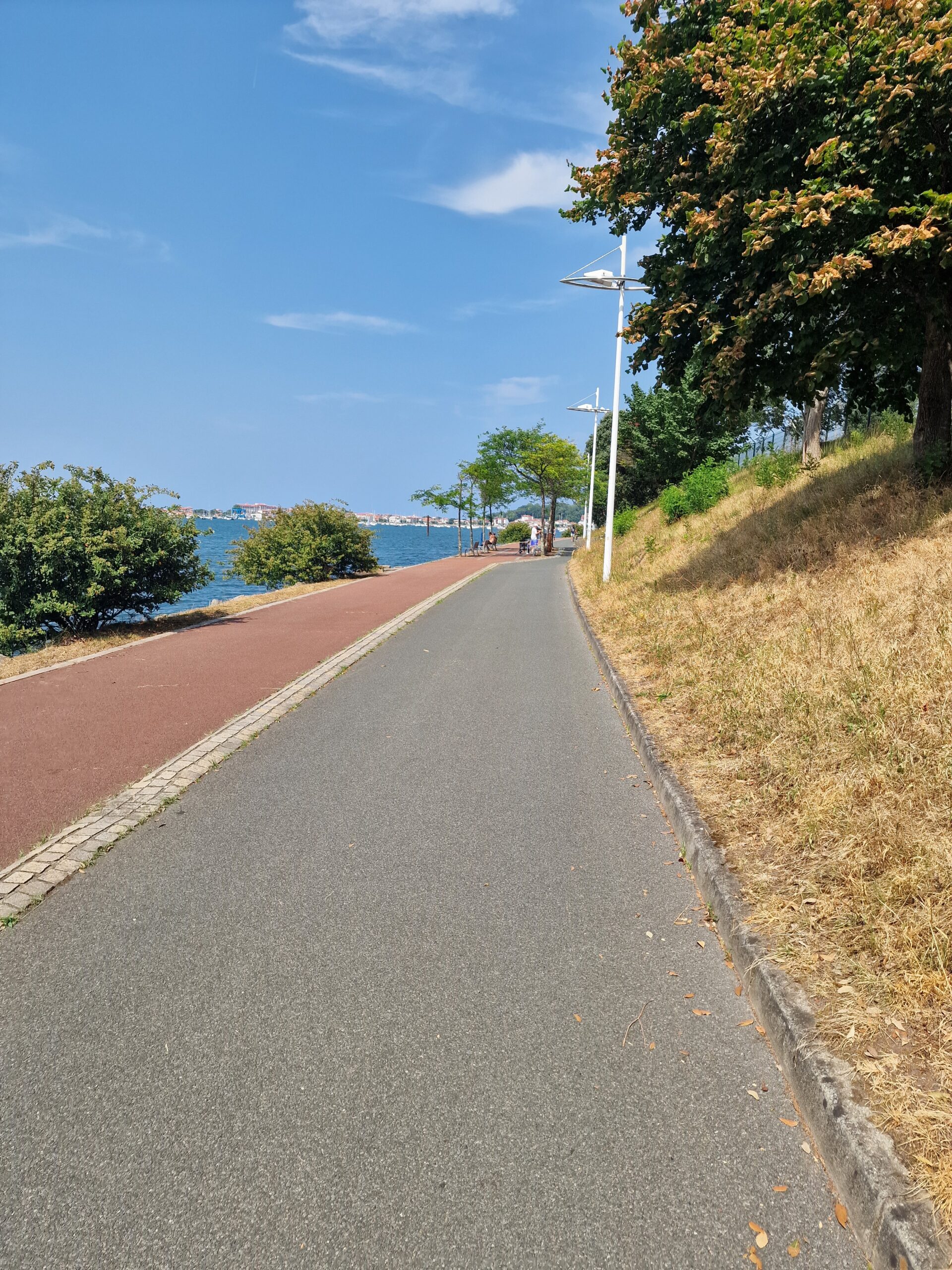
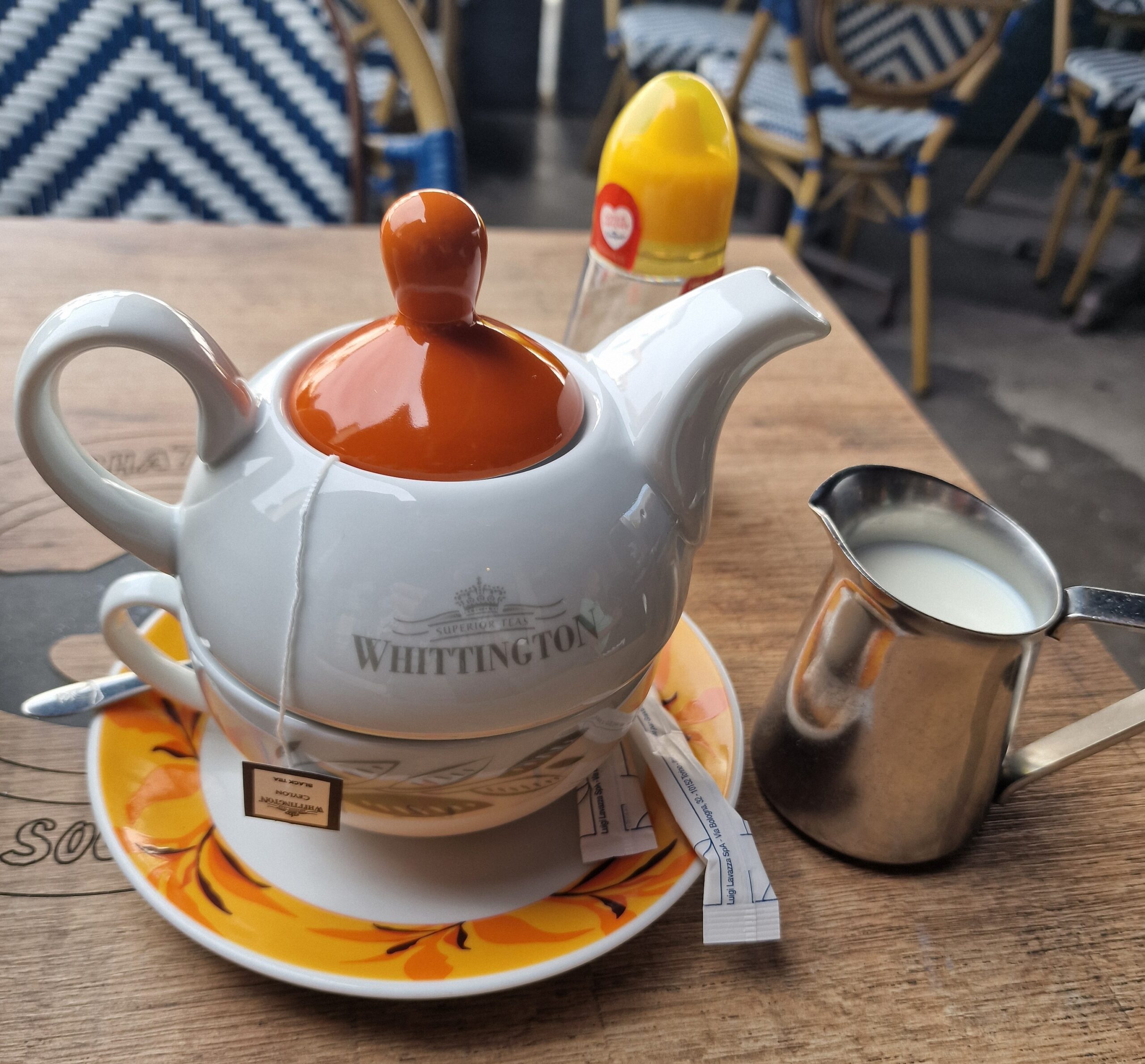
The coastline is beautiful along this stretch, and sometimes one is cycling on a dedicated cycle path. Unfortunately, I got lost at one point, but nevertheless, I continued on, arriving in Ciboure, and went into a café for a well-served, excellent cup of tea, which is a strange thing to find in France!
In the evening, I had an excellent meal in the Ciboure old village and watched a game of Basque pelota.
At the hotel, I met Chris and Pam, who had already cycled down the Vélodyssee, from Arcachon. They very kindly have made a donation to the Ukrainian cause. Thank you very much to them.
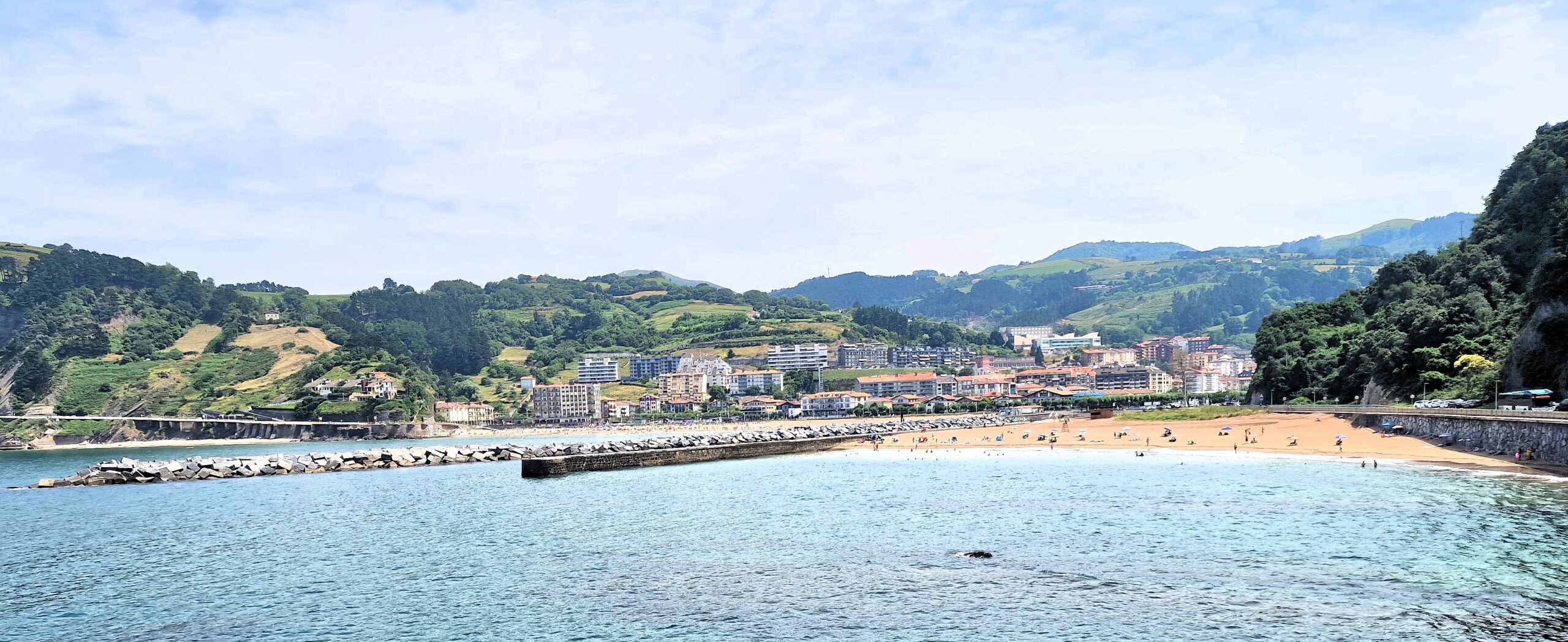
By now, I realize that these hills in the Basque Country have to be respected. What I thought I could do is now shortened to what is practical in this very hilly countryside. I set off today to San Sebastián, which isn’t very far, about 55 km, but there are some steep ascents, and I didn’t want to overdo it today. As it was the ascent was 689 m (2,260 ft).
So, the journey begins on the beautiful promenade of Deba. Soon I turn slightly inland to cross a river, and then to follow the Corniche, as they call it. The road next to the sea takes you quite a way along the coast.
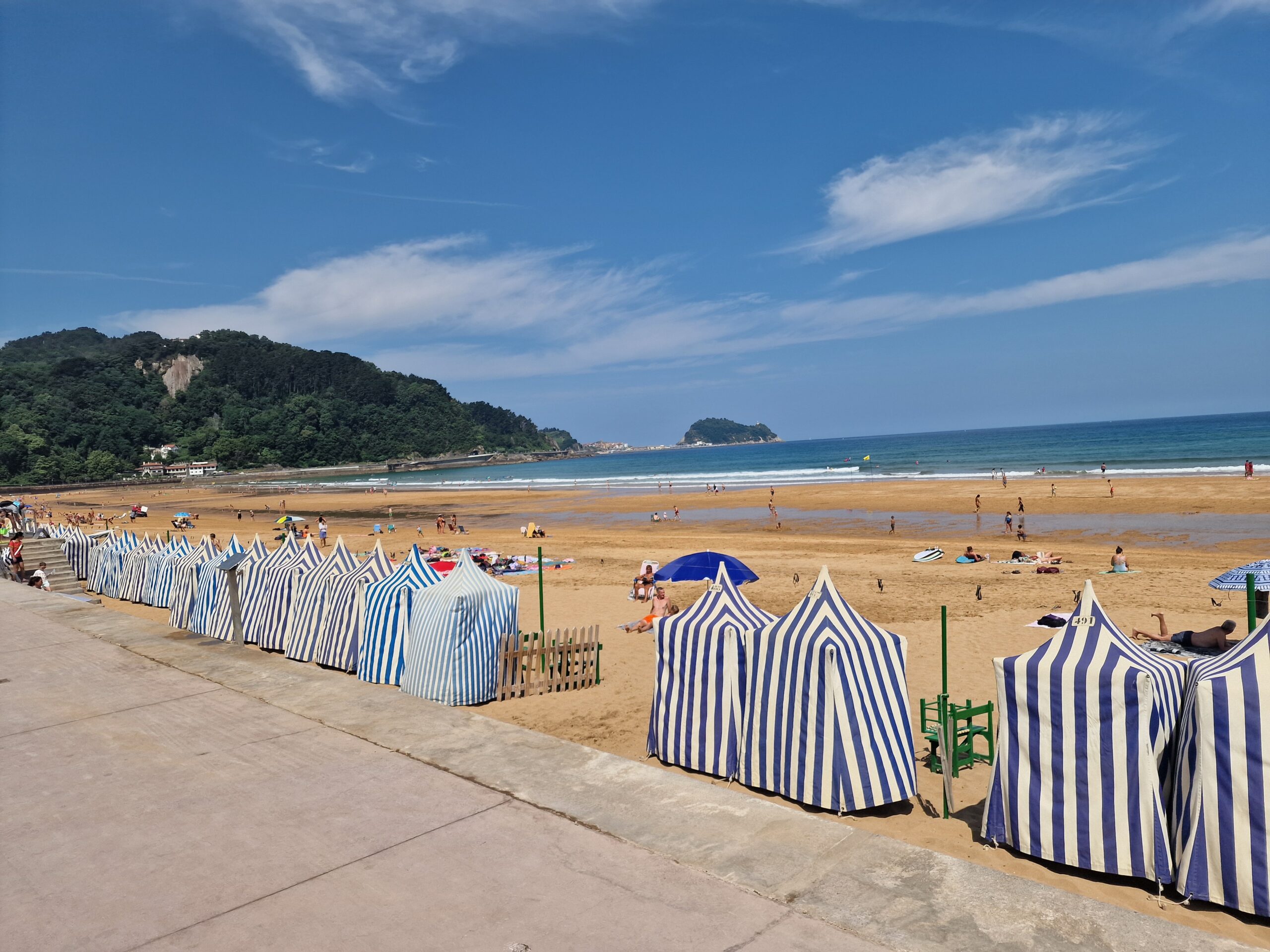
Another beautiful beach at Zarautz
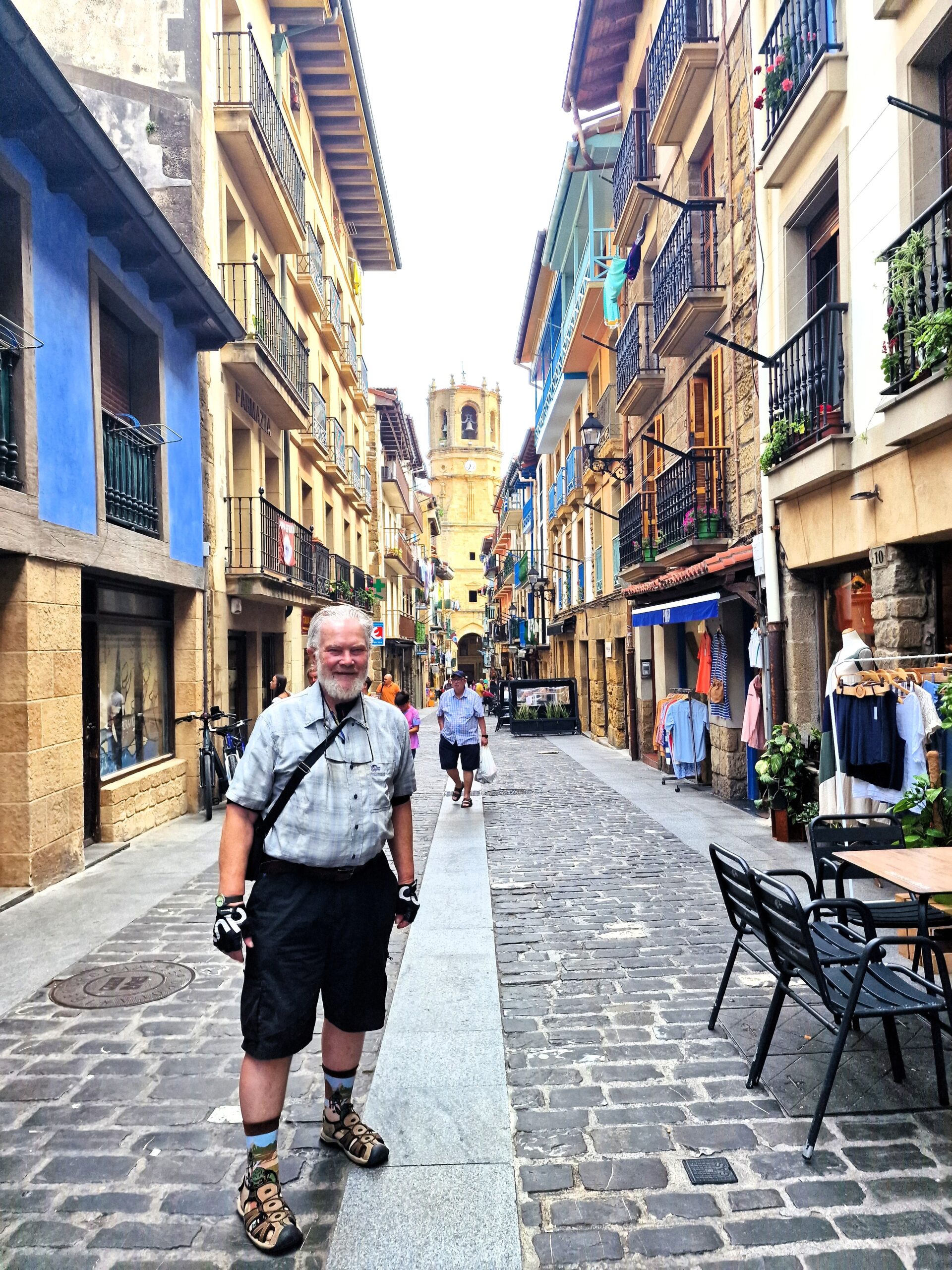
The old town of Getaria , right on the coast – where I bumped into my cycling buddies Greg & Joy again
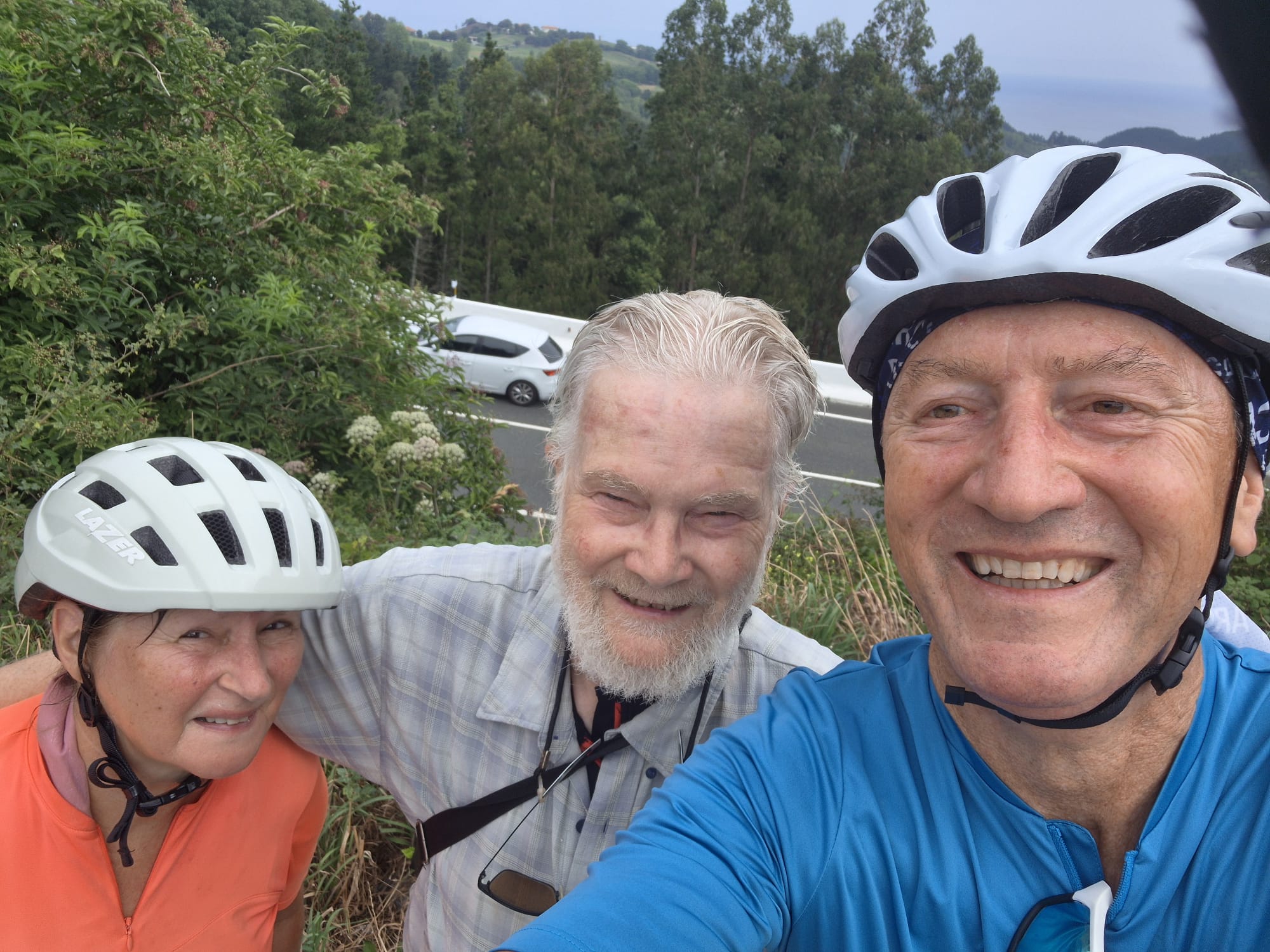
For a way I cycle with my cycling buddies, Joy and Greg:
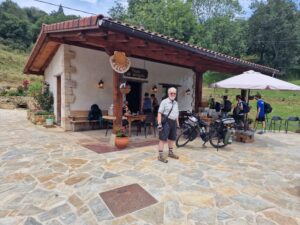
Leaving the road, we cycle up. But there is a benefit. Eventually, we join the Camino Santiago, and right at the top of this beautiful, winding, fairly steep climb through the countryside is a refuge. A beautiful location set back from the road, where pilgrims are enjoying a cold drink or coffee and some free food, all paid for by donations. You can either put the money in the box or not.
TXOKO DEL PEREGRINO – click this image and you will find the location
I was lucky enough to meet two Polish women, Agnieszka and Beneta. I asked them what did they think about the Ukrainian War. One of them said was very much involved in the early days of the Russian invasion in helping refugees who had come to Poland. I told her about my efforts to raise money, and she definitely supported that principle, so I’m hoping she or her friend will make a donation.
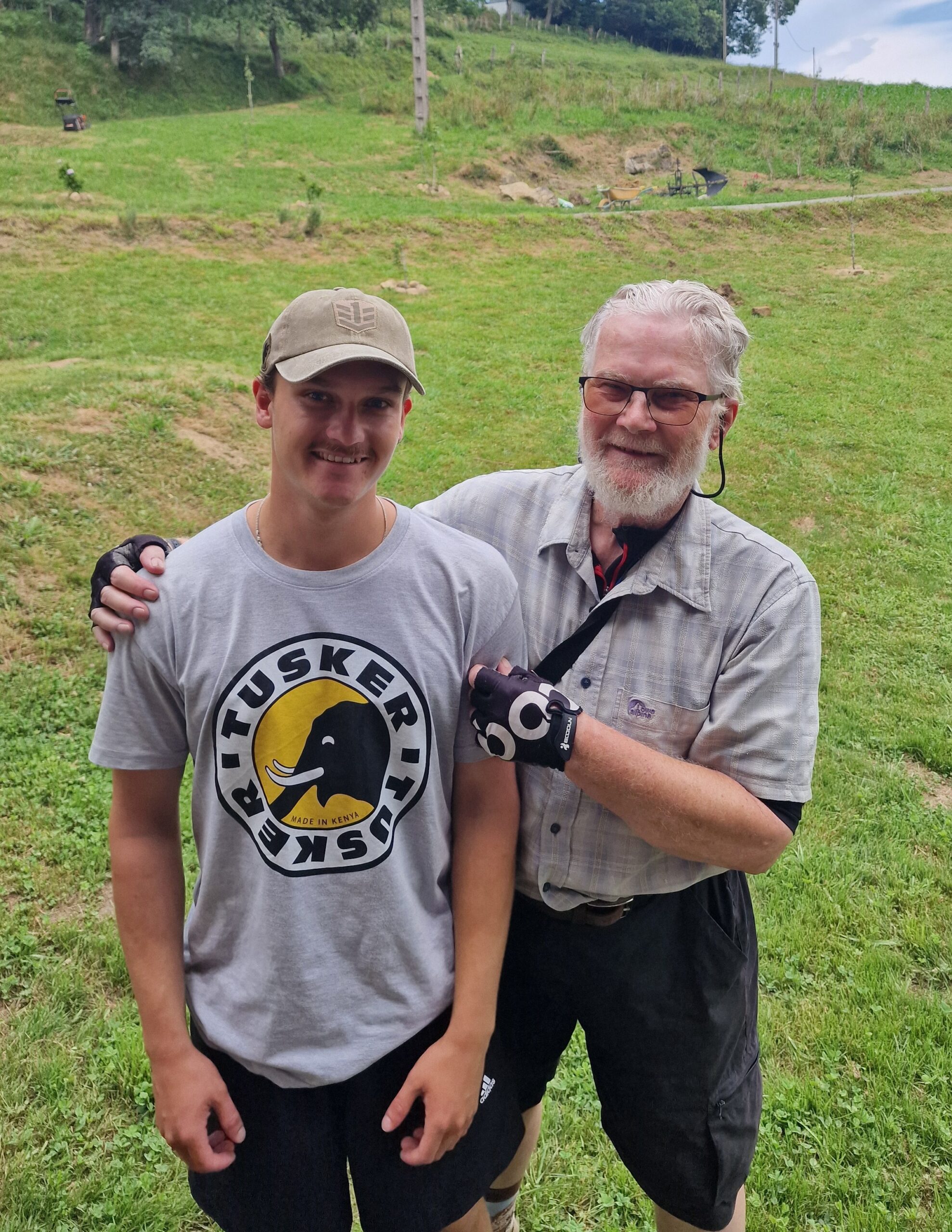
I also met a Danish group of walkers on their Camino Santiago, and they were all supportive of Ukraine. I chatted especially to Felix, who in Denmark has a friend from Ukraine, so he knows quite a lot about the situation. He’s pictured low in the photograph.
My friends Greg and Joy had caught up with me. We seemed to be leapfrogging along the route going north towards France! We cycled together for a way along the top of this rural route without much traffic, which was very pleasant.
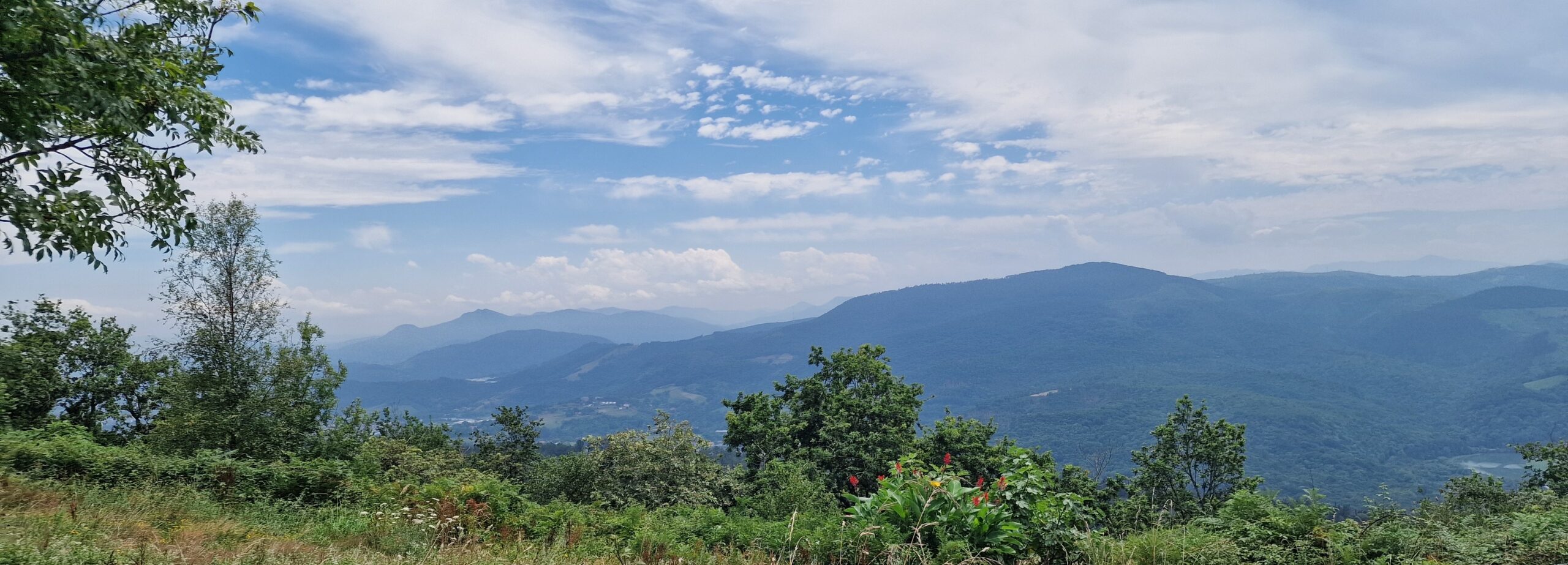
Beautiful views inland
I headed down into San Sebastián. As you approach the city, because I think it’s big enough to be called a city, you are on a cycle path into the centre. There are excellent cycle paths everywhere. I stayed in a hotel quite near the beach. A bit expensive, but it was an ad hoc booking, and things in these coastal resorts are quite expensive.
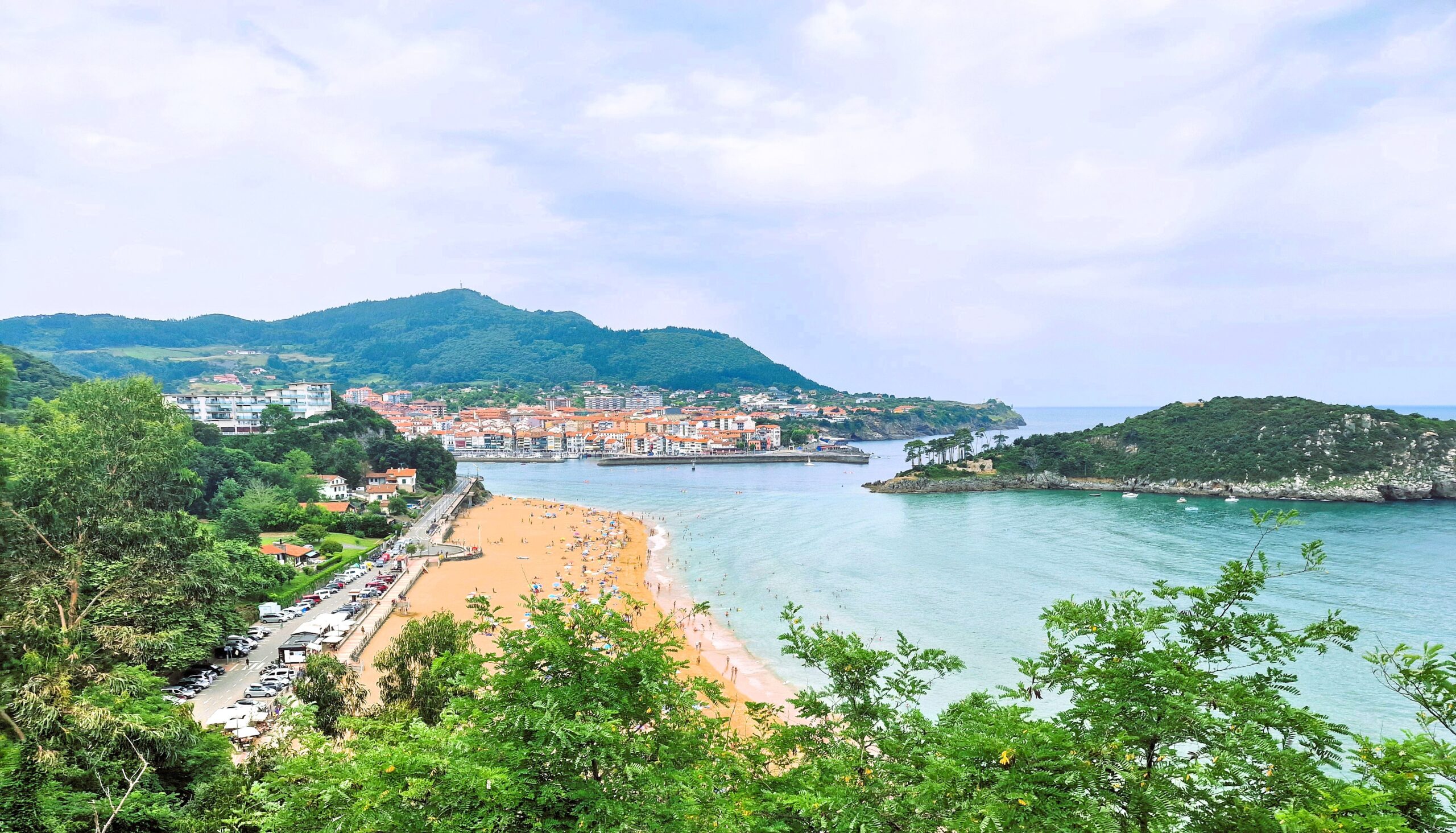
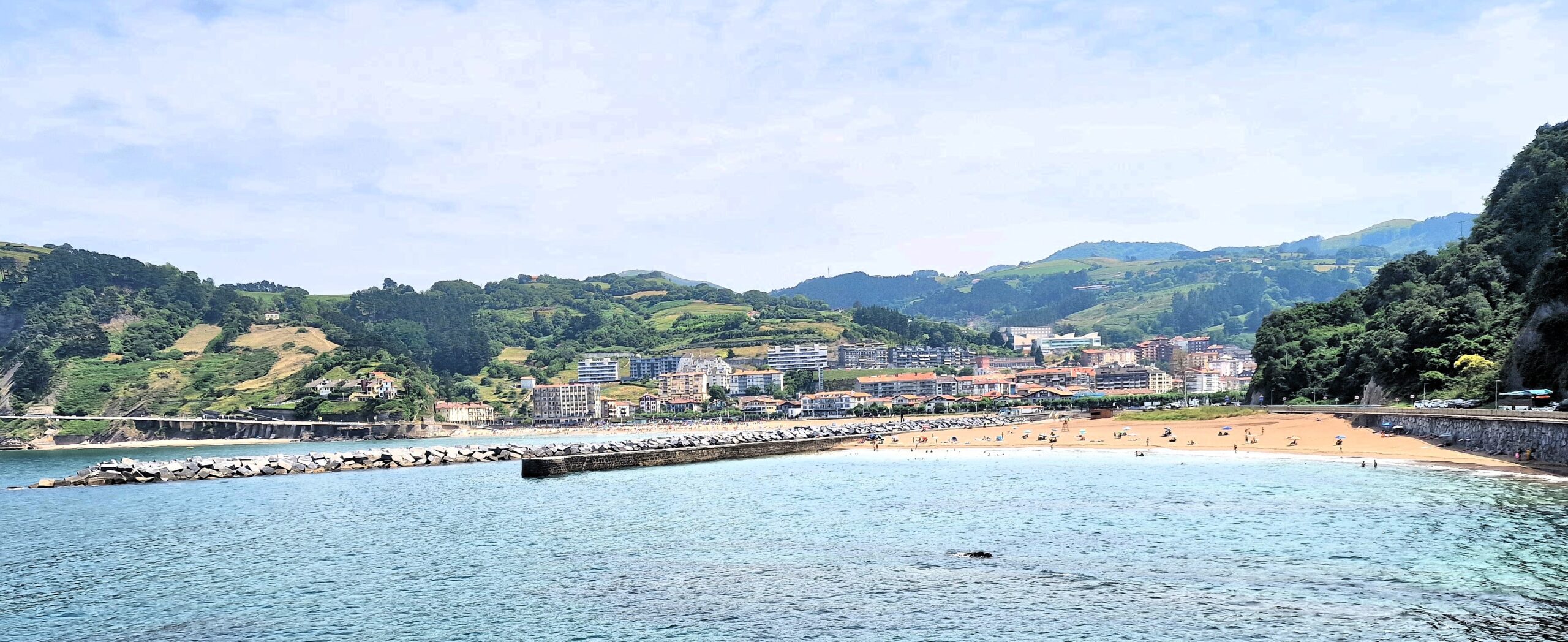
I thought day two was going to be a breeze, quite frankly. The weather was cooler than the tremendous heat of the previous day, slightly cloudy, and much lower temperatures. I cycled up to Lekeitio on the coast, which is a wonderfully lively port and holiday centre with superb beaches and an old town centred around what looked to me like an ancient cathedral, but it was probably just a church.
Lekeitio in the distance and the beach in the foreground
A longboat rowing race had just finished which is a serious sport around here, and there was much celebration going on with the winning team. Even the other teams were very buoyant and joining in the atmosphere. Cafes were full. Tapas bars were very tempting. I stopped for a coffee and met a really interesting guy, Sigur, (a Basque name) who had doubts about whether or not Ukraine should be supported. Clearly, he didn’t know a lot about the situation, and I recommended he watch things like France 24 and Al Jazeera as opposed to maybe more biased channels. He asked a lot of questions, and I hope I succeeded in convincing him to look at it more closely. We couldn’t speak for long, as his wife wanted to get on with her shopping, which is a pity, but there we are.
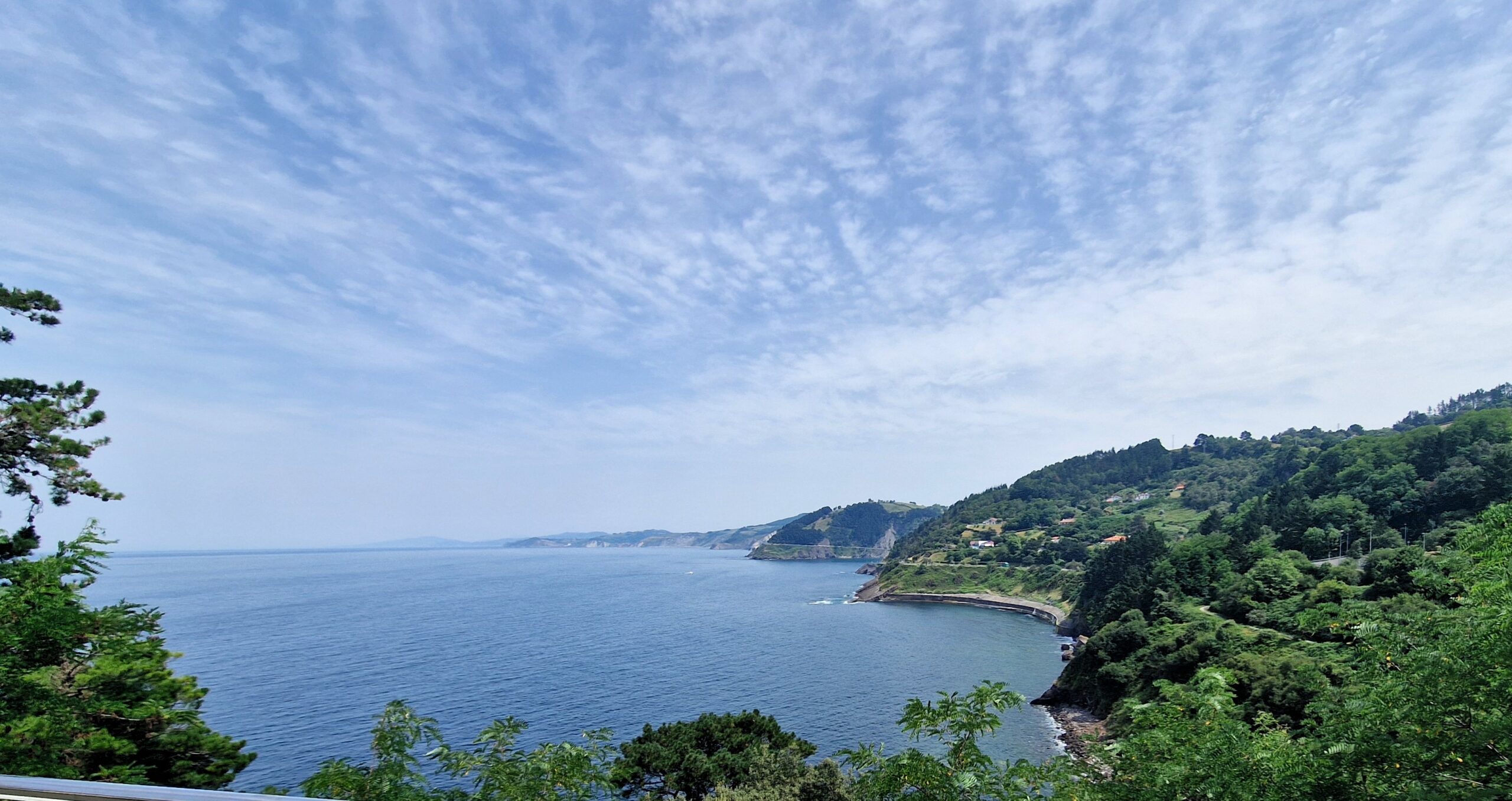
I was tempted to go and jump in the water, but it was still morning, about 11:00, so I thought I’d better get going, because I had quite a few climbs to make on the way to Deba. So I cycled on, and there were great views of the sea from the cliffs, and the coastal road wound its way around headlands and through hilltop peaks.
However, as the day wore on, the heat increased, and we were back to almost the temperatures of the first day, 33 degrees. My Garmin had plotted a course where the ascent was 660 meters, but when I paused to take a break, I found that the whole thing was going to take me over 900 meters of ascent. Although the distance is nothing to speak of very much, there were hill after hill. Although the views were great, I’m afraid I couldn’t get beyond the centre of Deba and had to check into a hotel there, which is where I met up with my cycling friends Greg and Joy.
It’s quite clear that the hills along this Basque Coast are really something to be wary of. I was absolutely exhausted when I got to Deba and couldn’t go on to the hotel, which I’d booked up over the hill into the next valley. That would be another 250 meters of ascent, and there’s no way I could do that. However, the compensation was the beautiful hotel, which my friends were staying in, and I enjoyed the swimming pool, seawater swimming pool in the hotel, and I enjoyed the air-conditioned room.
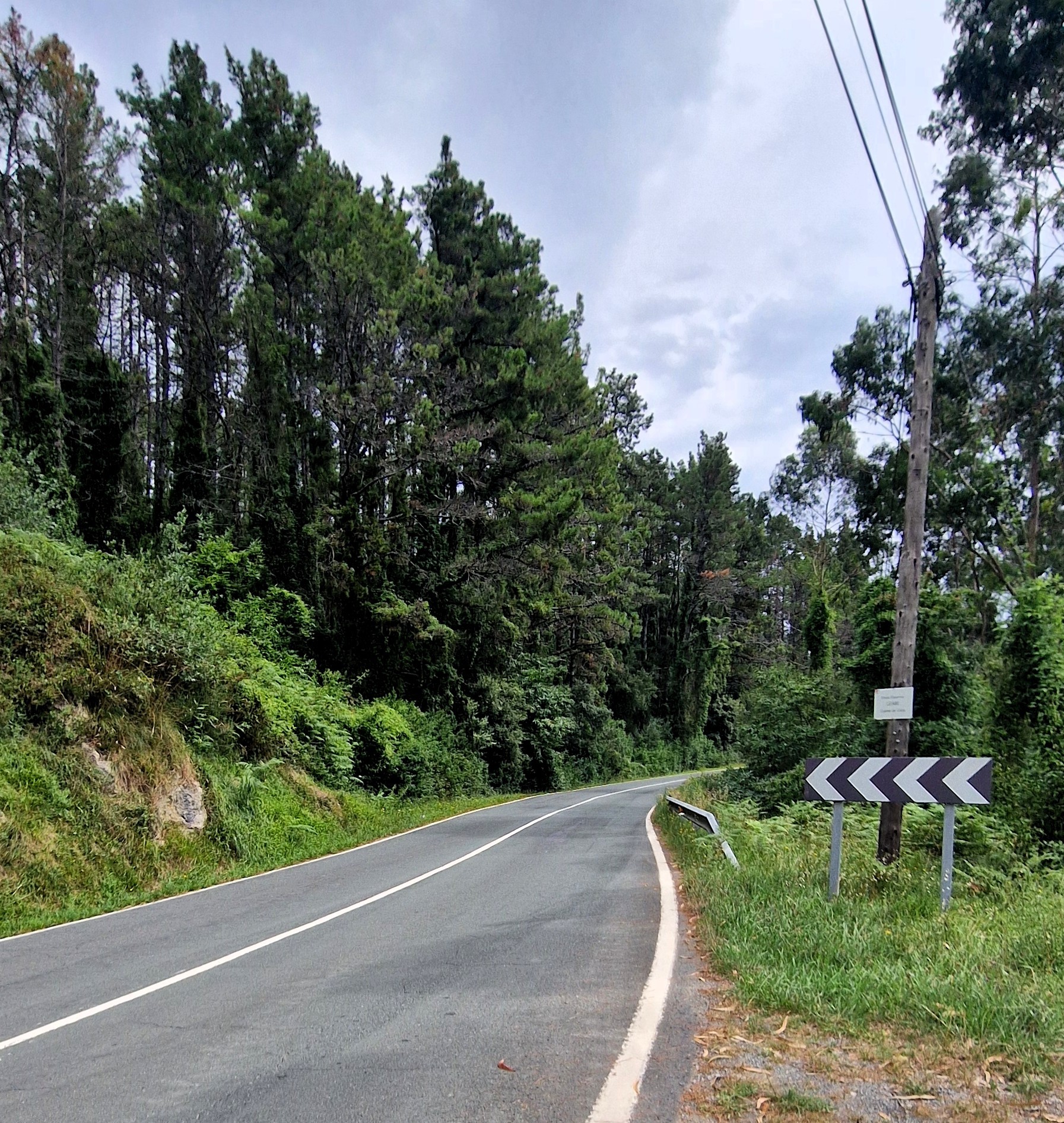
The winding road
Most of the route was along a main road. Not a motorway, not a trunk road, but a main road. Probably the original road that connected places along this coast, but now there’s a motorway inland and there’s less traffic, but there’s still a fair amount of traffic. There were just one short cycle path of 4 km. One of the problems of cycling in the Basque Country is there’s so little information about routes, and the maps are inadequate for cyclists. However, it was a Sunday, and there were lots of people out cycling, like the previous day. I never had any trouble with any of the motorists or lorry drivers. They all respected my position on the road, and they also respected the fact that going uphill, I was going to be rather slow.
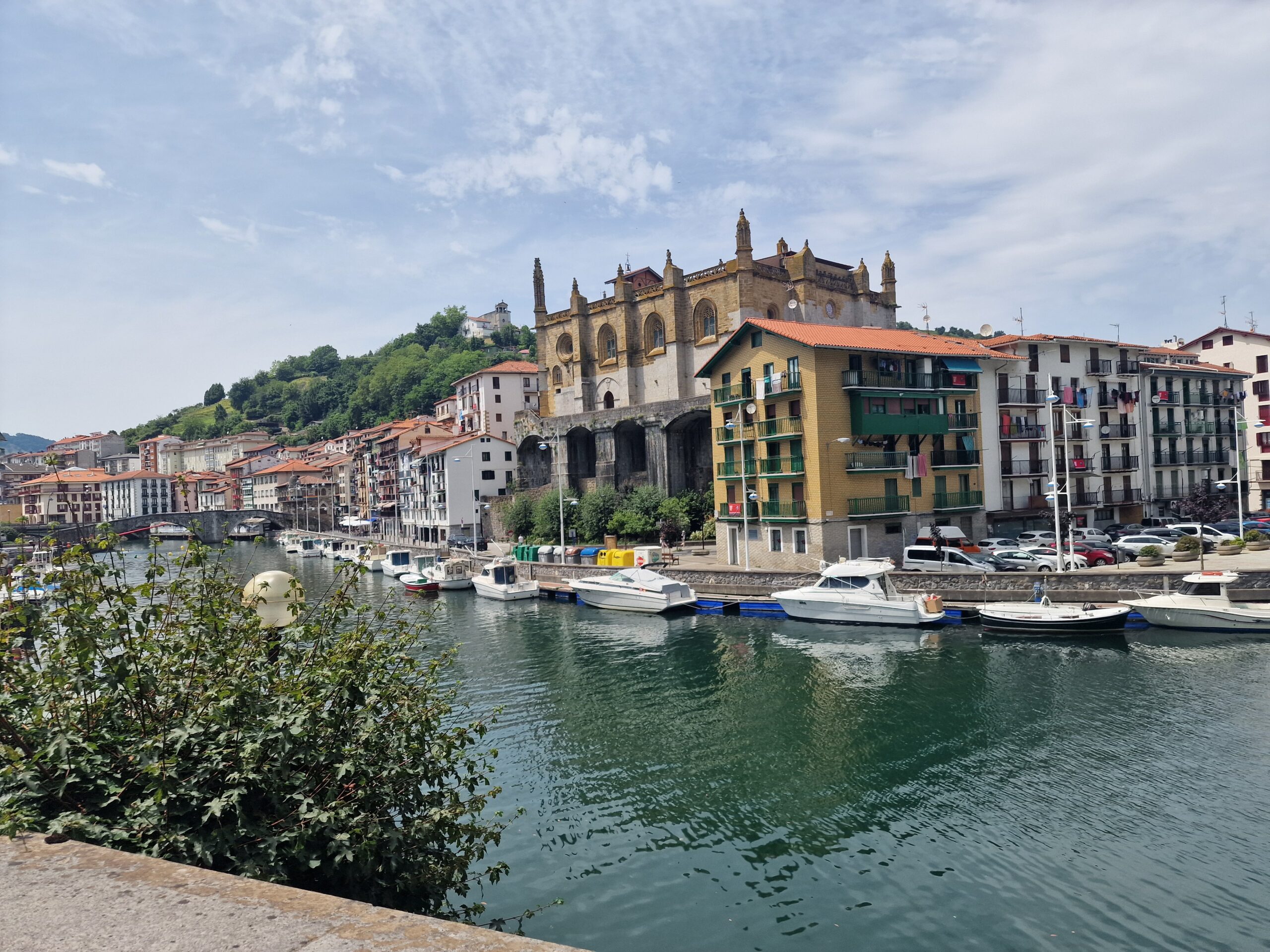
Ondarroa
Despite all of this, it was worthwhile cycling along this coast because there are some beautiful little villages and inlets. You could spend a whole month visiting the different sandy beaches and enjoying the landscape and the scenery. If you don’t want to do the cycling and if you don’t want to take a car, there’s also a narrow gauge railway which runs along this coast and will enable you to visit some of the places like Deba, and also get you onward to San Sebastian and into France.